Accommodation in the Austrian Alps: Best Places & Prices
Accommodation in the Austrian Alps: Where to Find the Most Atmospheric Places? A Comprehensive Guide with Prices and Tips for Drivers
Do you dream of waking up to a pristine view of three-thousand-meter peaks, smelling the rustic aroma of aged wood in an alpine cabin, and spending your evenings by a roaring fireplace after an intense day on the ski slopes or hiking trails? The Austrian Alps are synonymous with world-class tourist infrastructure, breathtaking landscapes, and a deeply rooted culture of hospitality that draws millions of travelers from across the globe each year. When planning a road trip to this mountainous paradise, the key to a successful holiday lies not only in selecting the perfect traditional guesthouse but also in thorough logistical preparation. In this extensive guide, you will discover which regions of Austria offer the most atmospheric accommodations, what prices to expect on-site, and how to seamlessly plan your driving route while keeping essential digital vignettes and sectional toll requirements in mind.
1. Why Choose the Austrian Alps for a Road Trip Holiday?
Traveling through the Austrian Alps by car provides an unparalleled level of comfort, flexibility, and adventure. Located right in the geographical heart of Central Europe, Austria boasts an exceptionally well-maintained and interconnected highway system, making it easily accessible from neighboring European countries and major international transit hubs. For travelers who value independence, a car is an absolute necessity when exploring the deep valleys and high-altitude plateaus of this stunning country.
Having your own vehicle allows you to bypass the constraints of public transport schedules and venture deep into the mountains. Many of the most authentic, atmospheric accommodations—such as secluded family-run farmhouses (Urlaub am Bauernhof) or isolated wooden alpine huts (Almhütten)—are perched high up on steep mountain pastures, far from train stations or regional bus stops. With a car at your disposal, you can effortlessly change ski resorts every morning, discover hidden alpine lakes tucked away in remote valleys, and reach the absolute best trailheads for high-altitude trekking without any logistical hassle.
Furthermore, Austria is globally renowned for its exceptionally strict preservation laws regarding landscape architecture. Unlike certain mass-tourism ski hubs in other parts of Europe, you will rarely encounter monstrous concrete high-rise hotels in Austrian mountain villages. Instead, local regulations dictate a strict adherence to traditional alpine aesthetics: stone foundations, meticulously hand-carved dark wood balconies overflowing with vibrant red geraniums in the summer, and steeply pitched roofs designed to blend harmoniously with the jagged mountain backdrops. This architectural consistency creates a uniquely cozy, welcoming atmosphere that the locals call Gemütlichkeit—a warm sense of comfort and belonging that defines the entire Austrian holiday experience.
2. The Most Atmospheric Regions and Towns in Austria
The Austrian Alps are incredibly diverse, with each federal state (Bundesland) possessing its own distinct cultural identity, culinary traditions, and geological wonders. Below is a curated selection of the most atmospheric regions and specific alpine villages that offer an extraordinary sense of place and serve as ideal basecamps for an unforgettable vacation.
Tyrol – The Heart of the Alps and the Timeless Charm of Alpbach
Tyrol is arguably the most iconic alpine region in the world, dominated by monumental mountain chains like the Ötztal, Zillertal, and Stubai Alps. If you are seeking a destination that embodies absolute architectural perfection and historical preservation, your primary target should be the village of Alpbach. Crowned multiple times as "Austria’s Most Beautiful Village," Alpbach owes its fairy-tale appearance to a strict local building ordinance enacted in 1953. This law mandates that every single new structure must conform to the traditional Tyrolean building style: while the ground floor may be plastered white, all upper floors must be constructed entirely of dark, weathered timber.
Another phenomenal destination within Tyrol is the sprawling Zillertal Valley (home to famous resorts such as Mayrhofen, Zell am Ziller, and Tux). It perfectly bridges the gap between old-world rural charm and cutting-edge alpine infrastructure, offering year-round skiing on the Hintertux Glacier. For those who prefer a touch of historic glamor mixed with rugged nature, the medieval town of Kitzbühel offers an atmospheric old town filled with centuries-old pastel-colored buildings alongside upscale boutique shopping and luxury alpine wellness retreats.
Salzburgerland – The Belle Époque Magic of Bad Gastein and Lakeside Zell am See
The Salzburg region offers a masterful combination of dramatic, jagged summits and crystal-clear alpine lakes. One of the most fascinating and atmospheric towns in the entire country is Bad Gastein, located deep within the Gastein Valley. Unlike any other village in the Alps, Bad Gastein features stunning, multi-story grand hotels built in the historic Belle Époque architectural style, clinging precipitously to the sides of a narrow, steep gorge. To add to the drama, a massive, thunderous waterfall crashes directly through the center of the town, filling the air with a refreshing mist.
For decades, Bad Gastein was the exclusive playground of European royalty and emperors who came to bathe in its natural thermal waters. Following a modern renaissance, these historic properties have been masterfully transformed into creative, boutique accommodations tailored to lovers of design, yoga, and mountain sports. If your taste leans toward classic, postcard-perfect lakeside views, the nearby town of Zell am See is unparalleled. Staying in a traditional lakeside chalet with an expansive view over the deep blue Zeller See, while the snow-capped glacier of Kitzsteinhorn looms in the immediate background, is an experience that stays with you for a lifetime.
Carinthia – The Sunny Side of the Alps and Heiligenblut Beneath the Großglockner
Carinthia, situated in the southernmost part of Austria bordering Italy and Slovenia, enjoys a distinctly Mediterranean-influenced alpine climate with the highest number of annual sunshine hours in the country. It is a land famed for its incredibly warm, clean swimming lakes (such as Wörthersee and Millstätter See) and the towering peaks of the High Tauern National Park. At the absolute head of the remote Mölltal Valley lies the breathtaking village of Heiligenblut am Großglockner.
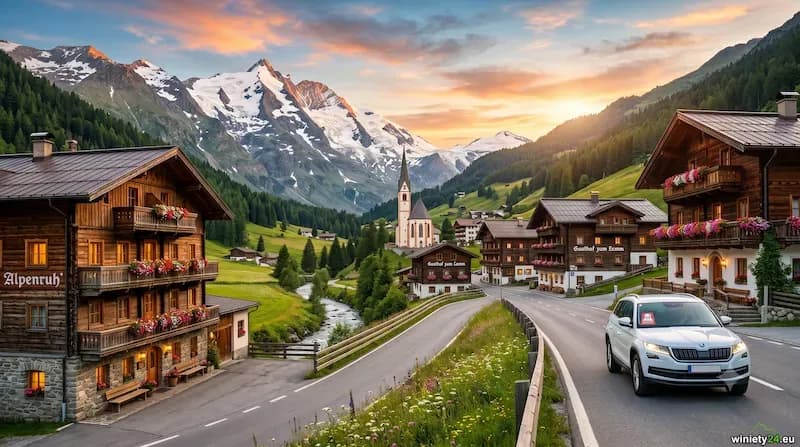
Heiligenblut is widely regarded by landscape photographers as one of the most stunningly positioned villages in the entire European continent. Positioned elegantly over a cluster of traditional wooden alpine homes is the striking gothic pilgrimage Church of Saint Vincent. When looking past its slender, pointed spire, your eyes are immediately drawn to the immense, pyramid-shaped silhouette of the Großglockner—Austria’s highest peak, standing at an imposing 3,798 meters above sea level. Booking an accommodation here guarantees absolute tranquility, crisp mountain air, and instant, direct access to the world-famous Großglockner High Alpine Road.
3. Types of Charming Accommodations – From Cozy Inns to Luxury Chalets
The hospitality sector in Austria is incredibly sophisticated. Over generations, the Austrians have perfected the art of interior warmth, combining natural materials with functional modern luxury. Depending on the exact vibe you wish to achieve for your holiday, you can choose from four primary styles of highly atmospheric accommodations.
Gasthof and Pension – The Traditional Family-Run Inn
These establishments represent the true backbone of Austrian alpine tourism. A Gasthof is a traditional, historic tavern or inn that features guest rooms on the upper floors, almost always owned and operated by the same family for multiple generations. The interiors are heavily characterized by local timberwork, frequently utilizing the aromatic wood of the Swiss stone pine (known locally as Zirbenholz). Scientifically proven to lower the human heart rate and drastically improve sleep quality, the scent of this wood adds an unmistakable layer of comfort. Room rates at a classic Pension almost always include a hearty, home-cooked alpine breakfast showcasing regional ingredients: artisanal mountain cheeses, house-made jams, fresh bread from the village baker, and cured Tyrolean speck. The hosts greet you by name, treat you like extended family, and possess invaluable insider knowledge on secret local hiking trails.
Urlaub am Bauernhof – Authentic Alpine Farm Stays
Austrian farm stay agritourism is regulated to an incredibly high standard. Properties registered under the official Urlaub am Bauernhof association are strictly vetted and categorized using a unique system of "flowers" instead of stars. For families traveling with young children, or anyone seeking a complete detox from modern commercial environments, this option is unbeatable. Guests stay in fully modernized apartments or rooms directly within a working dairy or livestock farm. You can experience the morning routine of drinking raw milk straight from the barn, watch the process of artisanal cheese making, or let your kids interact with farm animals amidst pristine meadows. Many of these heritage farms are situated on isolated mountainsides well above 1,000 meters altitude, offering sweeping, panoramic valley views that would cost a fortune in a commercial resort.
Almhütten and Berghütten – Secluded Mountain Huts
For couples seeking a romantic escape, or groups of close friends craving ultimate privacy, renting an Almhütte—a historic herder’s cabin converted into an accommodation, or a newly built log chalet situated high above the tree line—is a magical choice. Many of these rustic huts offer a beautiful return to simplicity: heating via a traditional ceramic wood stove (Kachelofen), a complete lack of cellular reception, and no televisions. In exchange, you are gifted with a private timber deck overlooking completely unpolluted, star-filled night skies, the gentle rushing sound of glacial streams, and an absence of any neighbors for miles around.
Luxury Chalet Villages and High-End Wellness Hotels
If you deeply appreciate traditional alpine style but refuse to compromise on world-class luxury, Austria boasts a rapidly expanding market of premium Chaletdörfer (dedicated luxury chalet villages). These are exclusive collections of private detached villas constructed using reclaimed mountain wood and natural stone. Each chalet is equipped with its own private wellness amenities, including bio-saunas, outdoor hot tubs built into the timber decking, and indoor floating fireplaces. In the morning, staff discreetly deliver a massive basket filled with a gourmet breakfast directly to your doorstep, and private chefs can be hired to cook multi-course traditional dinners right in your kitchen. Alternatively, cutting-edge wellness resorts (such as the famous Tauern SPA in Kaprun) feature sprawling thermal water complexes and infinity pools architectural suspended over dramatic alpine drop-offs.
4. Accommodation Prices in the Austrian Alps – Cost Breakdown and Hidden Fees
While Austria is firmly positioned as a premium European destination, it consistently delivers an exceptional price-to-quality ratio. The sheer standard of cleanliness, structural maintenance, and culinary quality found in a modest 3-star Austrian establishment frequently outperforms 4-star properties in other Mediterranean countries.
Accommodation costs are heavily dictated by two primary variables: seasonality and proximity to major infrastructure. Austria experiences two distinct peak travel seasons. The winter season runs from late December through Easter (with a massive pricing surge during the February school holidays), driven by ski tourism. The summer peak spans July and August, catering to hikers and climbers. Significant financial savings can be achieved by traveling during the shoulder seasons (May, June, September, and October). During these months, accommodation prices drop by as much as 40% to 50%, and the mountain trails are delightfully uncrowded.
Average Accommodation Rates per Night (Based on Category and Season)
| Accommodation Category | Low Season (Spring/Autumn) | Peak Summer Season (July-August) | Peak Winter Season (Ski Season) |
|---|---|---|---|
| Farm Stay Room (per person, includes breakfast) | €35 – €50 | €50 – €70 | €65 – €90 |
| Holiday Apartment for 4 People (self-catering) | €80 – €120 | €130 – €200 | €180 – €350 |
| Traditional 3* Gasthof (per person, Half-Board included) | €60 – €80 | €85 – €120 | €110 – €180 |
| Private Luxury Chalet (entire cabin for 4-6 people) | €250 – €400 | €400 – €600 | €600 – €1,200+ |
Understanding the Fine Print – Mandatory Extra Fees to Budget For
When finalizing your accommodation budget on international booking platforms or via direct email reservations with Austrian properties, it is imperative to calculate mandatory local fees that are often omitted from the base headline price:
- Local Tourist Tax (Kurtaxe / Ortstaxe): This is a municipal tax levied by the local government on every adult guest per night. It typically ranges from €1.50 to €3.50 per person, per day. Crucially, in many premier regions, paying this tax automatically grants you a regional summer/winter guest card (e.g., the Zell am See-Kaprun Sommerkarte). This card provides completely free, unlimited access to regional cable cars, public buses, lidos, and national park museums, easily saving a family hundreds of euros.
- Final Cleaning Fee (Endreinigung): This charge applies almost universally to holiday apartments, chalets, and self-catering cabins. It is a flat, one-time fee added to your bill to cover professional cleaning after your departure. The cost scales based on property size, ranging from €40 for a studio apartment to €150–€200 for an expansive, multi-bedroom chalet. If you are only booking a short 3-night stay, this flat fee can drastically alter your real nightly rate!
- Utility and Firewood Surcharges: In highly remote, historic high-altitude cabins (Almhütten), electrical power consumption and firewood for the primary heating stoves are sometimes metered separately and billed at checkout based on your exact usage.
5. Driver's Guide: Digital Vignettes, Toll Routes, and Traffic Regulations
Driving to and through the Austrian Alps is an incredibly scenic and smooth experience, provided you familiarize yourself with the country's strict tolling mechanisms and traffic laws. In Austria, a valid toll pass is legally required for all vehicles up to 3.5 tonnes traveling on autobahns (designated by an "A" prefix) and expressways (designated by an "S" prefix). The country utilizes a comprehensive vignette system.
Types and Prices of Austrian Vignettes (Current for 2026)
Austria provides excellent flexibility by offering several time-based vignette options for passenger cars and motorcycles. A highly convenient 1-day digital vignette is fully available, making short transits or weekend getaways exceptionally cost-effective.
- 1-Day Vignette: Ideal if you are merely transiting through Austria in a single day (e.g., heading south to Italy) or executing a quick day-trip hike. It costs approximately €8.60.
- 10-Day Vignette: The absolute standard choice for a typical week-long vacation. It remains valid for the exact day of purchase plus nine consecutive calendar days, costing roughly €11.50.
- 2-Month Vignette: Perfect for extended summer holidays or travelers planning two distinct mountain trips within a short window. It costs around €28.90.
- Annual Vignette: Valid for a total of 14 months (from December 1st of the prior year through January 31st of the following year), costing approximately €96.40.
Special Sectional Tolls – Streckenmaut
It is vital to understand that possessing a standard highway vignette does not cover the astronomical maintenance costs of certain complex alpine tunnels and high-altitude passes. These specific zones are designated as Streckenmaut sections, requiring a separate additional toll paid via automated credit card lanes at physical toll booths or pre-purchased digitally. The most prominent sectional tolls on the way to alpine accommodations include:
- Brenner Autobahn (A13): The critical mountain highway connecting Innsbruck directly south to the Italian border (approx. €11.00 per single crossing).
- Tauern Autobahn (A10): Passing through the massive Tauern and Katschberg tunnels on the main route between Salzburg and Villach (approx. €13.50).
- Arlberg Schnellstraße Tunnel (S16): A vital east-west link cutting directly under the Arlberg mountain massif between Tyrol and Vorarlberg (approx. €11.50).
- Panoramic Mountain Roads: The iconic Großglockner High Alpine Road operates as a private scenic attraction, costing roughly €43.00 for a single-day vehicle pass—though expensive, the unparalleled views make it worth every cent.
Mastering Alpine Driving and Local Law Enforcement
Navigating steep, winding alpine switchbacks demands complete driver focus and an impeccably maintained vehicle. Always check the integrity of your braking system and brake fluid levels before ascending. Austrian traffic police are notoriously meticulous, and fines are steep:
- IG-L Environmental Speed Zones (Immissionsschutzgesetz-Luft): Along major alpine autobahns (particularly the A12 and A13 in Tyrol), electronic overhead gantries frequently display lowered speed limits (typically 100 km/h) accompanied by the glowing text "IG-L". This signifies an legally binding environmental restriction to combat air pollution. Speeding violations inside an active IG-L zone carry vastly higher financial penalties than standard speeding fines, as they are legally classified as environmental crimes!
- Mandatory On-Board Equipment: Your vehicle must carry a fully stocked first-aid kit (unopened, with an unexpired shelf life), a reflective warning triangle, and high-visibility safety vests for the driver and every single passenger. These vests must be stored within the main cabin, not tucked away under luggage in the trunk.
- Strict Winter Equipment Mandate: Between November 1st and April 15th, under winter road conditions (snow, slush, ice), vehicles are legally permitted on the road only if fitted with winter tires (bearing the 3PMSF alpine symbol with a minimum tread depth of 4 mm). Furthermore, when climbing up to highly elevated, atmospheric accommodations during active snowstorms, you will frequently encounter the mandatory snow chain sign (a blue circular sign depicting a tire with chains). Carrying a properly sized set of snow chains in your trunk is legally required under these conditions.
6. Frequently Asked Questions (FAQ)
Do I need to buy my Austrian digital vignette weeks in advance?
If you purchase a digital vignette as a private consumer directly via the official Austrian state portal, strict European consumer protection laws dictate that the pass cannot become active until 18 days after purchase to accommodate online return policies. However, by utilizing professional registration platforms such as winiety24.eu, your license plate registration is processed via a commercial B2B channel, bypassed the waiting period and making your e-vignette valid for legal highway entry completely instantaneously.
How can I find truly atmospheric accommodations away from mass commercial tourism?
The single best strategy is to browse specialized networks like the official Urlaub am Bauernhof portal for farm stays, or target the highly localized tourism board sites of individual valleys (e.g., zillertal.at, gastein.com). Many ultra-charming, centuries-old pensions operated by elderly local couples choose to entirely avoid global booking giants due to high commission fees, relying instead on direct email bookings via regional tourism directories.
What does "Jause" mean, and should I opt for Half-Board (HB) dining?
Jause is the cherished Austrian tradition of a late afternoon savory or sweet snack, traditionally served between 3:00 PM and 5:00 PM. Many atmospheric 3-star and 4-star mountain hotels offer an upgraded catering plan termed Verwöhnpension (gourmet full board). This includes a massive breakfast buffet, a complimentary afternoon Jause (typically featuring hearty soups, cured meats, and fresh structural strudels), and a multi-course dinner. Given that a standard sit-down meal on the ski slopes or in town easily costs upwards of €20–€30 per person, choosing an accommodation with integrated board provides massive financial savings.
Are regional tourist summer cards an extra expense?
In the vast majority of cases, absolutely not. If your selected guesthouse or hotel is an official partner of the regional tourism cooperative, the card is issued to you completely free of charge upon check-in. These cards are immensely valuable; during the summer months, they grant completely free access to regional mountain lifts, which normally cost anywhere from €35 to €55 per single adult round-trip ride.