Speed Limits in Austria 2026: Fines and IG-L (Guide)
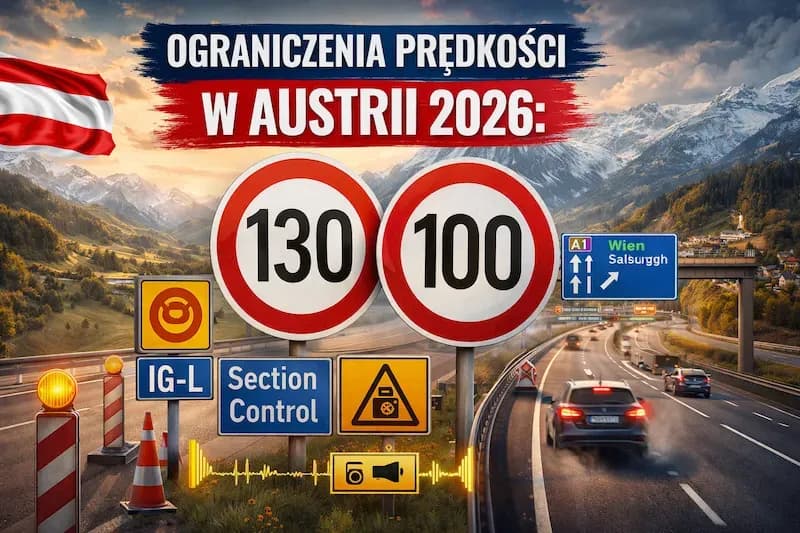
Speed Limits in Austria in 2026 – Everything You Need to Know
Austria is one of the most stringent countries in Europe regarding adherence to road traffic regulations. In 2026, the speed control system was further tightened, and the infamous IG-L environmental zones have become a nightmare for tourists. Before you set off on the Alpine routes, familiarize yourself with the current limits to avoid fines amounting to thousands of euros.
Standard Speed Limits in Austria (2026)
Unless otherwise indicated by signs, the following limits apply in Austria for passenger cars up to 3.5 tonnes:
- 🏙️ In built-up areas: 50 km/h
- 🛣️ Outside built-up areas: 100 km/h
- 🚗 On expressways (S): 100 km/h or 130 km/h (depending on signage)
- 高速 Motorways (A): 130 km/h
The IG-L Trap – Environmental Speed Limit
When traveling through Tyrol or Styria, you will certainly see the inscription "IG-L" on electronic signs next to a 100 km/h limit (often instead of the standard 130 km/h). This abbreviation stands for Immissionsschutzgesetz-Luft (Air Pollution Control Act).
Why is this important? A fine for speeding in an IG-L zone is not a regular traffic fine but a penalty for environmental pollution. In 2026, these amounts are drastically higher and can reach up to 2000 - 3000 EUR. Moreover, the police have the right to detain your vehicle for the duration of air quality measurements.
Table: Austrian Fine Schedule 2026 (estimated)
| Exceeding by... | Fine (Standard) | Fine in IG-L zone |
|---|---|---|
| up to 10 km/h | from 30 EUR | from 70 EUR |
| 20 - 30 km/h | from 60 EUR | from 200 EUR + administrative costs |
| over 50 km/h | from 500 EUR + loss of driving license | up to 3000 EUR + vehicle confiscation* |
*In extreme cases of recidivism and flagrant violation of regulations, in accordance with new regulations from 2024/2025 maintained in 2026.
Night driving and specific bans
It is worth remembering that on some motorways in Austria (e.g., A10, A12, A13, A14), night speed limits (between 10:00 PM and 05:00 AM) of 110 km/h apply. This aims to reduce noise in Alpine regions.
How to avoid problems on Austrian roads?
- Always look at electronic signs: Austria's traffic management system is very dynamic.
- Take care of tolls: A fine for not having a vignette is inevitable due to the camera system. Check the offer at winiety24.eu/pl/winiety-austria.
- Remember about tunnels: In tunnels (e.g., Karawanken or Arlberg), speed is usually limited to 80 km/h and very strictly controlled.
FAQ – Restrictions and Fines in Austria
Can electric cars drive faster in IG-L zones?
Yes, in 2026, purely electric vehicles (BEV) with appropriate markings can travel at 130 km/h in IG-L zones, where the limit for combustion cars is 100 km/h. Note: this applies only to cars with Austrian "E" plates or after registering a foreign car in the system (if local regulations allow).
Is there speed tolerance in Austria?
Tolerance is minimal (usually 3-5 km/h for fixed speed cameras). It is recommended to drive exactly according to the speedometer.
What happens if I don't pay a fine from Austria?
Austria has very effective data exchange agreements with Poland. An unpaid fine will be enforced by the Polish tax office or bailiff, and the amount will increase by collection costs.
Secure your trip and buy a vignette now: