Prices in Croatia 2026: Groceries, Shops and Restaurants
Tourism and Travel Costs 2026
Food Prices in Croatia 2026: How much does life cost on vacation?
Croatia has remained a favorite destination for Poles for years, but 2026 brings new price realities. After the full adoption of the Euro currency and changes in supply chains, grocery shopping costs have become a key element in planning a vacation budget. In this article, we analyze prices in popular supermarkets, local markets, and restaurants from Istria to Dalmatia.
Table of Contents:
Where to shop? Major retail chains in Croatia (2026)
In 2026, the retail market in Croatia is highly saturated with international brands, which is beneficial for tourists looking for known products at predictable prices. Choosing the right store can generate savings of 20-30% on a weekly trip.
Most popular chains in 2026:
- Konzum: The largest Croatian chain. You'll find it everywhere – from small shops on islands to huge MultiKonzum supermarkets in cities. Prices here are moderate, but it's worth looking for private-label products “K Plus”.
- Lidl: The favorite of budget tourists. Prices are very similar to Polish ones, and the quality of bakery and dairy products remains high.
- Tommy: Dominates in Dalmatia. Ideal for buying local cheeses and cold cuts (pršut).
- Plodine: Often located along exit routes and in tourist centers, they offer a wide range of beach accessories alongside food.
💡 Important note: Non-trading Sundays
In 2026, restrictions on Sunday trading still apply in Croatia. Stores can only be open on selected 16 Sundays a year (mainly during the summer season). Always check the opening hours of the local market on Google Maps before you leave!
Prices of basic food products (March 2026)
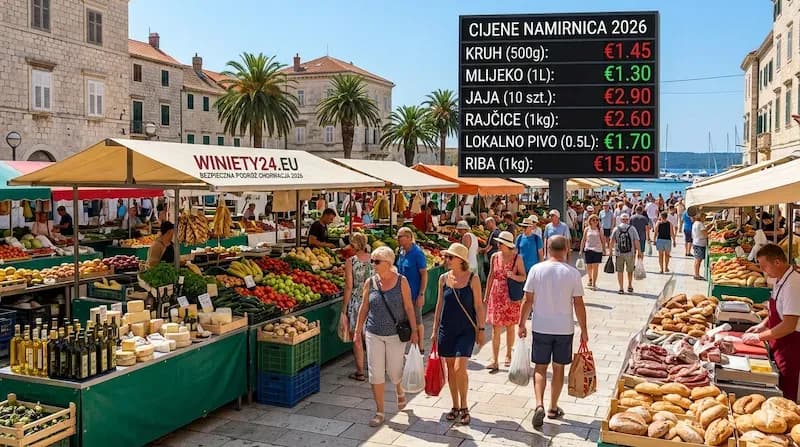
Below are the average prices in popular supermarkets (as of 2026). It should be noted that prices in small shops right on the beach can be 15-50% higher than in large supermarkets on the outskirts of cities.
| Product | Average price (Euro) | Average price (PLN)* |
|---|---|---|
| Bread (500g) | 1.40 € | ~6.10 zł |
| Milk (1L) | 1.25 € | ~5.45 zł |
| Eggs (10 pcs.) | 2.80 € | ~12.20 zł |
| Butter (250g) | 3.10 € | ~13.50 zł |
| Mineral water (1.5L) | 0.95 € | ~4.15 zł |
| Chicken breast (1kg) | 9.50 € | ~41.40 zł |
| Yellow cheese (Gouda, 1kg) | 11.00 € | ~48.00 zł |
| Tomatoes (1kg - seasonal) | 2.50 € | ~10.90 zł |
| Olive oil (0.75L - supermarket) | 12.00 € | ~52.30 zł |
*Exchange rate adopted for illustrative purposes: 1 EUR = 4.36 PLN.
Prices of drinks and alcohol in 2026
Croatia is famous for its excellent wines and lager beers. In 2026, alcohol prices in supermarkets remain stable, although beach bars have seen increases due to labor and energy costs.
- Local beer (Karlovačko, Ožujsko 0.5L - can): 1.50 € - 1.80 € in a supermarket / 4.00 € - 6.00 € in a restaurant.
- Imported beer (Heineken 0.33L): 1.90 € in a supermarket / 5.00 € in a club.
- Table wine (1L, Graševina): 4.50 € - 7.00 € in a supermarket.
- Good bottled wine (Plavac Mali): from 10.00 € upwards.
- Coca-Cola (2L): 2.60 €.
It is worth buying wines from local hosts (so-called Domaće vino). The price for 1 liter of homemade wine in Istria in 2026 is approximately 5.00 € - 8.00 €, and the quality often exceeds entry-level supermarket products.
Dubrovnik vs The Rest of Croatia – The Price Gap
When analyzing prices in Croatia in 2026, one cannot ignore the specifics of Dubrovnik and islands like Hvar or Korčula. In Dubrovnik's Old Town, prices in “minimarket” type stores can be 100% higher compared to supermarkets in Zagreb or Karlovac.
"A coffee on Stradun in Dubrovnik in 2026 costs around 6.00 € - 9.00 €, while in Makarska you will pay about 3.50 €. Similarly, with basic groceries – a bottle of mineral water in the tourist zone costs around 3.00 €."
If you want to save money, do your major grocery shopping around Split or Zadar before heading to a ferry towards smaller islands. Logistics of supplies to the islands significantly increases the final price on the shelf.
How much will we pay in restaurants (Konoba) in 2026?
Croatian gastronomy has evolved. Traditional Konoby (family taverns) offer high quality in 2026, but prices are no longer among the lowest in the Balkans.
- Pizza / Pasta: 12.00 € - 18.00 €
- Cevapi with ajvar (portion): 11.00 € - 15.00 €
- Grilled fish (1kg - sea bream/sea bass): 50.00 € - 75.00 €
- Octopus salad: 16.00 € - 22.00 €
- Dessert (Palačinke / Baklava): 5.00 € - 8.00 €
A standard dinner for a 4-person family (main courses + drinks) in 2026 costs around 80.00 € - 120.00 € depending on location.
How to save on food in Croatia? 5 golden rules for 2026
- Shop at “Pekaras”: Croatian bakeries (Pekara) are open almost 24/7. Burek with cheese or meat for 2.50 € is a hearty meal that will replace an expensive lunch.
- Fish markets (Ribarnica): Buy fresh fish in the morning (07:00-09:00) and grill it yourself at your apartment. You can save up to 70% of the restaurant price.
- Tap water: In most regions of Croatia, tap water is safe to drink and tasty. A reusable bottle can save you several Euro weekly.
- Daily menu (Gablec / Marenda): Between 11:00-14:00, many restaurants offer fixed lunch sets for local workers at prices of 8.00 € - 12.00 €. Look for the sign “Marenda”.
- Loyalty apps: Chains like Lidl and Konzum have apps with coupons. It's worth installing them before your trip.
Budget Summary
Assuming you prepare some of your meals yourself, the daily food budget per person in 2026 is approximately 25.00 € - 35.00 €. If you plan to eat exclusively in restaurants, be prepared for expenses of around 60.00 €+ daily.
Don't forget about travel costs! Quick e-vignette registration will allow you to focus on your vacation, not formalities.
Prices in Croatia 2026 – Frequently Asked Questions (FAQ)
Can I pay in PLN or USD in Croatia in 2026?
No, the only official currency is Euro (EUR). It's advisable to have a multi-currency card (e.g., Revolut) to avoid exchange fees at traditional banks.
How much does a scoop of ice cream cost in 2026?
The price of a scoop of ice cream (sladoled) ranges from 2.00 € in smaller towns to 3.50 € in tourist centers like Split or Zadar.
Do fuel prices affect food prices?
Yes, in 2026, transport costs are included in product prices. Fuel in Croatia is usually slightly more expensive than in Poland, so it's worth filling up in Slovenia or Austria.
Are Polish products available in Croatia?
In Lidl and Kaufland, you can easily find Polish brands (e.g., dairy, juices). They are usually 10-20% more expensive than in Poland.