5 Things Expats Need to Know About Driving in Europe
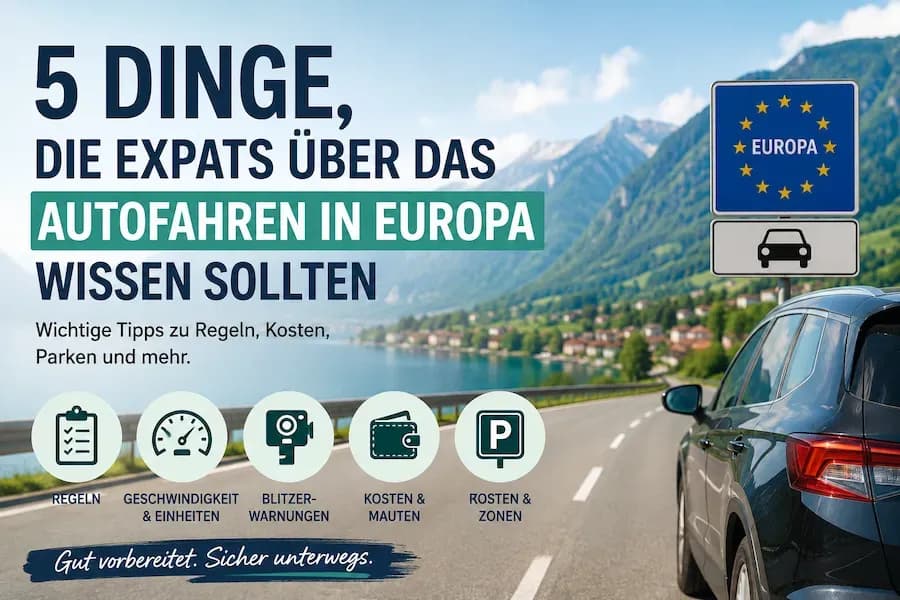
5 things expats need to know about driving in Europe
Moving abroad is exciting, but getting behind the wheel in a new country can feel a little nerve-wracking. Roads, rules and habits vary more than you might expect, and small mistakes can lead to confusion, fines or even accidents. But a little preparation goes a long way. Once you understand how driving in Europe works, you'll feel far more confident exploring your new home and the countries next door. Here are five things every expat should know before setting off.
While there are some similarities, each country has its own rules
Rules can vary, so make sure you research the specifics to save yourself some stress. For example, some countries, like Sweden and Norway, require you to drive with headlights on during the day, even in summer. In parts of Germany, low-emission stickers are compulsory in low-emission zones, and parts of the Autobahn have no speed limits.
You may also need to carry different things in your vehicle. In France, for instance, you must carry a warning triangle and reflective vest in your car at all times.
Distance is usually measured in kilometres
Most of Europe measures distance and speed in kilometres, and a "50" sign means 50 km/h. However, there are some European locations which are exceptions to the rule: the UK, Jersey, Guernsey, and the Isle of Man all use miles instead of kilometres.
You need to switch off speed limit alerts
In some countries, including Germany and France, it’s illegal to use a GPS or other electronic equipment to alert you that speed cameras are close by. Turn off these notifications on your GPS if possible, or buy a new one when you arrive in Europe that you can be sure meets all the local rules.
It helps to set aside a budget
Every expat needs to find a careful balance between having enough money to live in their new country and leaving some aside to send back home. And part of that budget will go towards transport, including driving costs that are easy to overlook. Many motorways charge tolls, and some countries require a vignette (a sticker you buy in advance to use certain roads). Fuel prices also vary widely between countries.
Plan ahead by budgeting for tolls, parking and fuel. Keep some cash and a card handy, as not every toll booth accepts both. Knowing your likely costs reduces the chance of having some nasty surprises during your trip.
Check the parking rules before you set off
Parking systems differ from town to town, let alone country to country, and many historical centres and major cities restrict traffic from entering certain areas. Some cities use colour-coded zones, while others rely on paper discs that show your arrival time – get it wrong and you could return to a ticket.
Research the rules before you travel so you understand the local systems and, if in doubt, use a paid car park or ask a local.