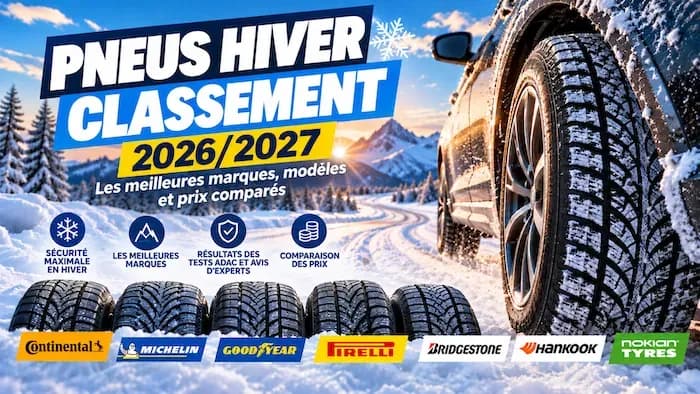
Best Winter Tires 2026/2027 – ADAC Tests & Rankings
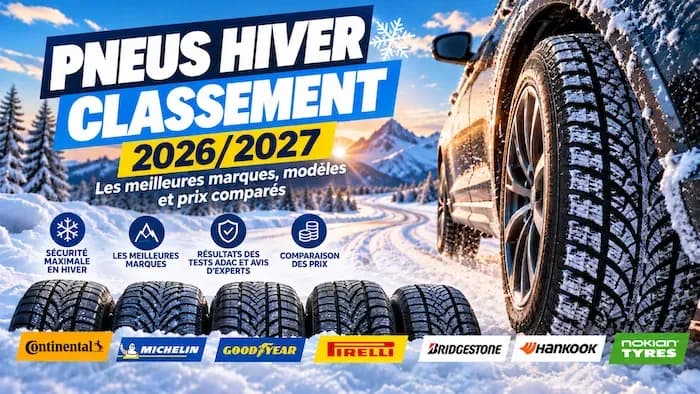
MOTORING GUIDE · WINTER 2026/2027
Best Winter Tires 2026/2027: Ranking, ADAC Test Results, Prices, Pros and Cons
Which winter tires offer the best balance of safety, grip, durability and value? Our detailed winter tire comparison covers premium, mid-range and budget brands, independent ADAC tests, real strengths and weaknesses, and estimated prices for the 2026/2027 winter season.
What are the best winter tires for 2026/2027?
A good winter tire must perform consistently across several very different situations: braking on wet roads, steering around unexpected obstacles, accelerating on snow and handling slush. Resistance to aquaplaning, tread wear, rolling resistance and ride comfort matter too.
In much of Europe, winter driving does not mean snow every day. Rain, near-freezing temperatures, occasional ice, damp motorways and milder spells often occur in the same season. A balanced all-round tire can therefore be a better choice than a tire that excels only on deep snow.
These winners come from different tests and different tire sizes. Their scores must not be interpreted as a single direct ranking across all dimensions.
ADAC Winter Tire Ranking 2026 — Official Test Results
In September 2026, ADAC published winter tire tests covering 32 products in two sizes: 185/65 R15 and 225/50 R17. The following table shows all 16 models tested in 225/50 R17, a size used on certain mid-size cars. ADAC uses the German grading system: the lower the score, the better.
| Rank | Brand and model | ADAC score | Verdict |
|---|---|---|---|
| 1 | Pirelli Cinturato Winter 3 | 2.2 | Good |
| 2 | Continental WinterContact TS 870 | 2.3 | Good |
| 3 | Goodyear UltraGrip Performance 3 | 2.4 | Good |
| 4 | Michelin Alpin 7 | 2.5 | Good |
| 5 | Bridgestone Blizzak 6 | 2.6 | Satisfactory |
| 6 | Hankook Winter i*cept RS3 | 2.7 | Satisfactory |
| 7 | ESA+TECAR Supergrip Pro2 | 2.7 | Satisfactory |
| 8 | Dunlop Winter | 2.9 | Satisfactory |
| 9 | Yokohama BluEarth Winter V906 | 3.1 | Satisfactory |
| 10 | Vredestein Wintrac Pro+ | 3.1 | Satisfactory |
| 11 | Falken Eurowinter HS02 Pro | 4.8 | Poor |
| 12 | Toyo Observe EWS1 | 5.3 | Poor |
| 13 | Tracmax Ice-Plus S210 | 5.4 | Poor |
| 14 | Aptany RW211 | 5.4 | Poor |
| 15 | Royal Black Royalwinter UHP | 5.5 | Poor |
| 16 | Sunwide Snowide | 5.5 | Poor |
Source: ADAC 2026 winter tire test — 225/50 R17. This is the official test order, not a commercial recommendation list.
What did the ADAC 2026 test reveal?
Only four products received an overall rating of “good”; six were rated “satisfactory”, and six were rated “poor”. This is a clear reminder that a winter-tire label alone does not guarantee balanced performance.
Differences were especially striking during wet-road braking tests from 80 km/h. Pirelli and Continental stopped in roughly 35 metres, while Sunwide required almost 12 metres more. Sunwide produced competitive results in some snow exercises but finished last because of significant weaknesses in other conditions.
Best Winter Tire Brands and Models — In-Depth Reviews
The ten reviews below follow the ADAC 2026 order for 225/50 R17. Each profile examines performance, benefits, trade-offs, likely use cases and an approximate price. Prices are estimates rather than confirmed current offers, and they can differ substantially between countries and retailers.
01
Premium · ADAC 2026: 2.2
Pirelli Cinturato Winter 3
Pirelli Cinturato Winter 3 won the ADAC 2026 test in size 225/50 R17. It is designed for drivers who expect dependable braking and controlled handling on wet and changeable winter roads.
Its strengths include short stopping distances, precise handling and resistance to aquaplaning. It also performed well in genuine winter conditions. Particularly useful for drivers facing wet motorways and frequent rainfall.
Advantages
- First place in ADAC 2026 for 225/50 R17
- Excellent wet-road braking
- Precise and reassuring handling
- Strong aquaplaning resistance
- Versatile in changing weather
Disadvantages
- Relatively high purchase price
- Not always economical for inexpensive city cars
- Availability varies by tire size
- Advantage over competitors varies with the dimension
02
Premium · ADAC 2026: 2.3
Continental WinterContact TS 870
Continental is one of Europe’s best-known tire manufacturers. The WinterContact TS 870 delivers a balanced combination of braking ability, winter grip and reassuring steering.
It finished second in the 2026 ADAC 225/50 R17 test. Braking on wet and dry surfaces was good, although ADAC noted small weaknesses in dry-road steering precision and certain snow manoeuvres.
Advantages
- Very good braking results
- High level of wet-road safety
- Balanced performance on rain and snow
- Stable everyday handling
- Consistently strong independent-test record
Disadvantages
- More costly than many mid-range tires
- Minor limitations in selected snow exercises
- Slightly less precise on dry roads than the winner
- The TS 870 P is a different model and requires separate assessment
03
Premium · ADAC 2026: 2.4
Goodyear UltraGrip Performance 3
The Goodyear UltraGrip Performance 3 has been one of the most versatile winter tires of recent seasons. It won the ADAC 2025 test in size 225/40 R18 with a score of 2.0 and performed strongly again in 2026.
Longevity is a notable attraction. In the 2025 test, the projected lifespan of the tested version exceeded 76,000 kilometres. This is a comparative estimate, not a mileage guarantee; wear depends on driving habits, alignment and road conditions.
Advantages
- ADAC 2025 test winner in 225/40 R18
- Very high projected tread life
- Good wet-road performance
- Versatility across winter conditions
- Potentially competitive cost per kilometre
Disadvantages
- Premium pricing
- Small snow-and-ice weaknesses in the 2026 test
- Results differ by tire size
- Real-world life depends on alignment and driving style
04
Premium · ADAC 2026: 2.5
Michelin Alpin 7
Michelin Alpin 7 is well suited to drivers who regularly face low temperatures, snowy roads and mountain areas. It finished fourth in the ADAC 2026 225/50 R17 test.
Its strengths in winter-specific disciplines make it appealing for ski trips and snow-covered secondary roads. However, a heavily worn tread will not retain the performance of a new tire, so tread-depth checks are essential.
Advantages
- Strong performance in genuinely wintry conditions
- Good traction on snow
- Fourth overall in ADAC 2026
- Appropriate for frequent winter travel
Disadvantages
- High price
- Less precise dry-road steering in the test
- Not the leading choice in every wet-road exercise
- Can be costly for very low annual mileage
05
Premium · ADAC 2026: 2.6
Bridgestone Blizzak 6
The Bridgestone Blizzak 6 is a modern winter tire from the Japanese manufacturer, competing with Continental, Michelin and Goodyear.
It placed third with 2.2 in the ADAC 2025 test of 225/40 R18, but scored 2.6 (satisfactory) in the 2026 225/50 R17 test. This highlights why results must be checked for the required size.
Advantages
- Strong ADAC 2025 performance
- Balanced everyday characteristics
- Recognised premium manufacturer
- Available in multiple specifications
Disadvantages
- Only satisfactory overall in the 2026 225/50 R17 test
- Can cost nearly as much as higher-rated rivals
- Performance differs across sizes
06
Mid-range · ADAC 2026: 2.7
Hankook Winter i*cept RS3 W462
Hankook is a compelling alternative to the most expensive premium brands. Its Winter i*cept RS3 W462 placed sixth in the ADAC 2026 225/50 R17 test.
Value is the main advantage. A set can cost substantially less than flagship premium models, although the score of 2.7 indicates a smaller overall safety margin than the leading four products.
Advantages
- Competitive price-to-performance ratio
- Satisfactory ADAC 2026 score
- Lower four-tire purchase cost
- A practical choice for everyday driving
Disadvantages
- Lower overall test grade than the leaders
- Less safety reserve in some disciplines
- Exact version and specification should be checked
07
Alternative brand · ADAC 2026: 2.7
ESA+TECAR Supergrip Pro2
ESA+TECAR Supergrip Pro2 is a lesser-known winter tire which matched Hankook’s overall score of 2.7 in ADAC 2026.
It achieved a good environmental assessment but is primarily distributed in Switzerland. Buyers elsewhere may struggle to locate matching tires and reliable local prices.
Advantages
- Satisfactory result in ADAC 2026
- Strong environmental assessment
- An alternative to mainstream brands
Disadvantages
- Limited availability outside Switzerland
- No representative European retail price
- Difficult to replace one matching tire locally
08
Established premium brand · ADAC 2026: 2.9
Dunlop Winter
The Dunlop Winter tested by ADAC in 2026 should not be confused with Dunlop Winter Sport 5. It finished eighth in the 225/50 R17 ranking.
Tread longevity was a highlight: ADAC projected around 59,300 kilometres for the tested version, alongside the best environmental rating in its group. But strong durability does not automatically mean the strongest braking or snow handling.
Advantages
- Impressive projected tread life
- Leading environmental result in the 2026 test
- Potentially low cost per kilometre
- Satisfactory overall rating
Disadvantages
- Lower driving-safety score than the leaders
- Average results in some manoeuvres
- Do not confuse with Winter Sport 5
09
Mid-range · ADAC 2026: 3.1
Yokohama BluEarth Winter V906
Yokohama’s BluEarth Winter V906 is a mid-range alternative from a recognised Japanese tire manufacturer. It scored 3.1 in the ADAC 2026 225/50 R17 test.
The model may appeal where it is discounted or readily available, but its overall test performance trails the leading tires by a noticeable margin. A familiar manufacturer name is no substitute for checking the exact model.
Advantages
- Satisfactory overall ADAC score
- Alternative to expensive premium products
- Potentially attractive when discounted
Disadvantages
- Clearly lower rating than the leading four
- Less reserve in some safety exercises
- Check independent tests for the required dimension
10
Mid-range / upper segment · ADAC 2026: 3.1
Vredestein Wintrac Pro+
Vredestein Wintrac Pro+ is intended for drivers seeking winter-capable road handling and a potentially lower price than top premium models.
It took tenth place with 3.1 in ADAC 2026, so it is worth considering only after comparing both its actual price and independent performance with stronger competitors.
Advantages
- Satisfactory overall test rating
- Alternative to flagship premium brands
- Available in various sizes
Disadvantages
- Noticeable performance gap to the leading models
- Trade-offs in some test disciplines
- Price may approach better-scoring products
Best Winter Tires for Small Cars: ADAC 185/65 R15 Ranking
Smaller cars often use 15-inch wheels, so a ranking based on 225/50 R17 cannot be applied directly. ADAC also tested 16 winter tires in size 185/65 R15 in 2026. Continental WinterContact TS 870 topped this comparison with a score of 2.2; Michelin Alpin 7 followed at 2.5.
| Rank | Model | ADAC score |
|---|---|---|
| 1 | Continental WinterContact TS 870 | 2.2 |
| 2 | Michelin Alpin 7 | 2.5 |
| 3 | Hankook Winter i*cept RS3 | 3.1 |
| 4 | Linglong Sport Master Winter | 3.1 |
| 5 | Optimo Winter Touring OW41 | 3.2 |
| 6 | Goodyear UltraGrip Performance 3 | 3.3 |
| 7 | GT Radial WinterPro2 Evo | 3.5 |
| 8 | Bridgestone Blizzak LM005 | 3.8 |
Source: ADAC winter tire test 185/65 R15 (2026).
Why do results change between tire sizes?
Even within one model family, different sizes can use different structures, load indices and tread specifications. For example, Goodyear UltraGrip Performance 3 earned 2.4 in 225/50 R17 but 3.3 in 185/65 R15 in ADAC 2026. Always prioritise a test in your actual tire size, or the closest truly comparable specification.
Premium, Mid-Range or Budget Winter Tires?
Winter tires are often divided into premium, mid-range and economy segments. These labels can be helpful when browsing, but the performance of a specific model matters much more than its marketing category.
Premium
Examples: Michelin, Continental, Pirelli, Goodyear, Bridgestone and Dunlop.
Often appropriate for high-mileage driving, motorways, family vehicles and demanding winter routes. The strongest models provide balanced safety across road conditions.
Main drawback: Higher purchase cost.
Mid-range
Examples: Hankook, Kleber, Fulda, Kumho, Uniroyal and Vredestein.
Can provide very good value when an individual product performs well in independent tests.
Main drawback: Greater compromises in selected performance areas.
Economy
Examples: Barum, Dębica, Kormoran, Matador and other budget brands.
Appealing for drivers with limited budgets, but performance varies considerably and cheaper products need careful checking.
Main drawback: The risk of significant braking or handling weaknesses.
Are Dębica, Barum, Kormoran and Kleber good winter tire brands?
These brands attract buyers seeking affordability. However, every model and tire size needs its own assessment. As an example, Kleber Krisalp HP3 received an ADAC score of 2.6 in the 2025 225/40 R18 test, while Barum Polaris 6 received 3.8 in the 2026 185/65 R15 test. These results are from different comparisons and should not be mistaken for a head-to-head test.
What about Nokian winter tires?
Nokian Tyres is well known for winter-focused products. Its European Snowproof series should be distinguished from Nordic-focused products such as Hakkapeliitta. The Nokian Snowproof 2 scored 3.8 in the ADAC 2026 185/65 R15 test. Nordic tires may excel on packed snow and ice while performing differently on wet, relatively warm European roads. Select tires according to where you drive, not simply the reputation of a brand in extreme winters.
Winter Tire Prices in 2026/2027: How Much Does a Set Cost?
Prices depend heavily on size, load and speed ratings, country, retailer, availability and special versions such as XL or Run Flat. Below are illustrative price ranges in euros for one 225/50 R17 tire. They are estimates, not confirmed retail quotes; fitting is excluded.
| Tire model | One tire | Set of four |
|---|---|---|
| Pirelli Cinturato Winter 3 | €150–185 | €600–740 |
| Continental WinterContact TS 870 | €145–180 | €580–720 |
| Goodyear UltraGrip Performance 3 | €130–165 | €520–660 |
| Michelin Alpin 7 | €150–185 | €600–740 |
| Bridgestone Blizzak 6 | €130–170 | €520–680 |
| Hankook Winter i*cept RS3 | €95–125 | €380–500 |
| Dunlop Winter | €110–150 | €440–600 |
| Yokohama BluEarth Winter V906 | €95–130 | €380–520 |
| Vredestein Wintrac Pro+ | €100–140 | €400–560 |
Why buying the cheapest tire can be expensive
Saving money at checkout may not be worthwhile if braking distances are significantly longer. When comparing costs, consider tested safety, potential tread life, mileage, professional fitting, balancing, valve replacement, TPMS servicing and seasonal storage.
How to Choose the Right Winter Tires for Your Car
1. Verify the tire dimensions
The size marking 205/55 R16 means a nominal width of 205 mm, an aspect ratio of 55%, radial construction and a 16-inch rim diameter. Check your vehicle manual, manufacturer’s tire information or approved fitment list before ordering.
2. Check load and speed ratings
The load index specifies how much weight an individual tire may carry, while the speed symbol indicates its rated maximum operating speed under defined conditions. Follow vehicle approval requirements and local regulations, especially for heavy SUVs, electric vehicles and vans.
3. Look for the 3PMSF marking
The Three-Peak Mountain Snowflake (3PMSF) symbol indicates that a tire meets defined snow-performance approval criteria. M+S alone is not an equivalent test confirmation. Some countries have winter-tire regulations that specifically refer to approved markings.
4. Read EU tire labels — but do not stop there
EU labels provide information on rolling resistance, wet grip and external noise. They do not replace broad independent assessments of snow grip, dry handling, braking and aquaplaning.
5. Match XL, Run Flat and other specifications
Extra Load (XL), Run Flat and vehicle-specific homologated tires may not be interchangeable without checking the car maker’s requirements. TPMS compatibility and wheel size must also be considered.
Which Winter Tires Suit Different Driving Conditions?
City driving and daily commuting
Wet pavement, slush and sudden braking are often more relevant than deep snow. Consider: Pirelli Cinturato Winter 3, Continental WinterContact TS 870 and Goodyear UltraGrip Performance 3.
Motorways and long journeys
High-speed stability, aquaplaning resistance, predictable lane changes and tread life become especially important. Consider: Goodyear UltraGrip Performance 3, Pirelli Cinturato Winter 3 and Continental WinterContact TS 870.
Mountain roads and frequent snow
Snow traction, braking downhill and cornering stability matter. Snow chains or other winter equipment may also be mandatory in some regions. Consider: Michelin Alpin 7, Pirelli Cinturato Winter 3 and Continental WinterContact TS 870.
High-mileage and fleet use
Safety and projected tread life both influence total cost. Consider: Goodyear UltraGrip Performance 3, Dunlop Winter and Hankook Winter i*cept RS3, while recognising their different safety scores.
Winter tires for SUVs and electric cars
Heavier vehicles need adequate load capacity and an appropriate tire construction. Efficiency and cabin noise can be especially relevant in EVs. A passenger-car test of a different size cannot replace approval checks for your specific vehicle.
Tread Depth, DOT Codes and When to Replace Winter Tires
Tire condition depends on more than age. Examine remaining tread, cracking, uneven wear, sidewall damage, previous repairs and storage conditions.
What tread depth should winter tires have?
Minimum legal tread depth varies across countries and vehicle categories. In several European countries the general passenger-car threshold is 1.6 mm, but ADAC recommends replacing winter tires once tread falls below 4 mm for safety reasons. Check the law where you will drive, especially before travelling internationally.
What is a DOT production date?
The last four digits of the manufacturing date code show the production week and year. For example, 3526 means week 35 of 2026. A production date alone does not determine tire safety; storage, use and condition matter as well. ADAC advises preferring new tires that are not more than three years old at purchase.
Must winter tires be replaced after five years?
There is no universal rule requiring replacement at exactly five years. Older tires, tires with cracks and those with uneven wear should be examined by a qualified tire specialist, taking account of the manufacturer’s guidance.
When should you switch from summer to winter tires?
Plan the change before persistent winter conditions arrive. The popular 7°C guideline is only a general indication, not a rigid technical limit. Local weather, planned journeys and national regulations are more important.
Six Common Winter Tire Buying Mistakes
1. Shopping on price alone
Cheap tires can have much longer wet-road stopping distances. Compare braking, handling and overall independent ratings before buying.
2. Assuming every tire from a famous brand is equally good
Manufacturers offer different generations and product families. Find results for the actual model and relevant dimensions.
3. Choosing an incorrect load index
An insufficient load rating can make the tire unsuitable, especially for SUVs and EVs.
4. Installing only two winter tires
Mixing summer and winter tires across axles can destabilise handling. Use four compatible winter tires where appropriate.
5. Ignoring pressure and wheel alignment
Incorrect pressure or alignment increases wear, energy consumption and the risk of poor handling.
6. Assuming four-wheel drive replaces winter grip
All-wheel drive may help a vehicle accelerate on slippery surfaces, but it does not automatically shorten braking distances or improve cornering grip.
FAQ: Frequently Asked Questions About Winter Tires
What are the best winter tires in 2026?
Pirelli Cinturato Winter 3 won the ADAC 2026 test in 225/50 R17 with a score of 2.2. Continental WinterContact TS 870 won the 185/65 R15 test, also with 2.2.
Is Michelin better than Continental?
It depends on the exact model, size and use. Continental TS 870 achieved a better overall ADAC 2026 rating than Michelin Alpin 7 in both tested sizes, while Michelin delivered particularly strong performance in winter-specific conditions.
Are premium winter tires worth the money?
They may be, especially for high-mileage drivers and demanding weather, but choose based on independent test results rather than brand prestige alone.
Which affordable winter tires are worth considering?
Hankook Winter i*cept RS3 scored 2.7 in the 2026 225/50 R17 ADAC test, making it an interesting mid-range option. Check exact versions of lower-priced alternatives.
When should winter tires be fitted?
Before persistent winter weather arrives. Local temperature patterns, road conditions, planned journeys and country-specific rules are more important than one fixed date.
Are winter tires legally required in Europe?
Rules differ by country. Some countries require suitable winter tires in certain conditions, others apply seasonal requirements, and some have no general winter-tire mandate. Check current rules along your entire route.
Winter tires or all-season tires?
Well-tested all-season tires may suit mild climates and low-mileage drivers. Dedicated winter tires are especially worthwhile for frequent mountain driving, snow and demanding winter trips.
How much do four good winter tires cost?
Costs vary significantly by dimensions. The illustrative premium price ranges for 225/50 R17 in this guide are approximately €520–740 for four tires before fitting.
Is 4 mm tread depth a legal requirement?
Not universally. In many places it is a safety recommendation rather than the general legal minimum. Some countries impose different rules, so always verify locally.
Do winter tires affect fuel economy or EV range?
Yes. Rolling resistance, tire weight, correct inflation and driving conditions can influence fuel or electricity consumption.
Does an AWD or 4x4 vehicle still need winter tires?
Yes, when road conditions call for them. AWD may improve acceleration traction but does not cancel the limits of braking and cornering on snow and ice.
Which winter tires should I choose for a trip across Germany and Austria?
Select tires approved for the car, check the 3PMSF marking, ensure adequate tread depth and review current seasonal/condition-based rules in each country. Chains or other equipment may be required on certain routes.
Winter Tire Ranking 2026/2027: Our Conclusions
The best winter tire must be safe not only on snow but also on wet roads and during evasive manoeuvres. No single tire wins every test size and every performance category.
ADAC 2026 winner · 225/50 R17
Pirelli Cinturato Winter 3 — score 2.2.
ADAC 2026 winner · 185/65 R15
Continental WinterContact TS 870 — score 2.2.
Interesting for high mileage
Goodyear UltraGrip Performance 3 — good performance and long projected tread life.
For frequent snow driving
Michelin Alpin 7 — strong winter-condition results in the 2026 test.
A mid-range value option
Hankook Winter i*cept RS3 — score 2.7 in 225/50 R17.
Before buying, verify your car’s approved tire dimensions, load and speed ratings, then compare independent results and current prices. Choosing on evidence rather than advertising is the safest approach.