
Sandy Beaches in Croatia - Where to Go? A Driver's Guide
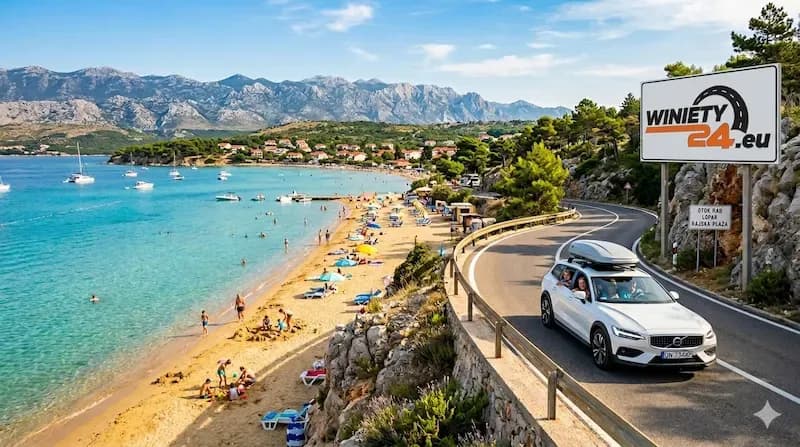
Sandy Beaches in Croatia – Where to Go? A Complete Guide for Drivers
For years, Croatia has dominated the rankings of the most popular holiday destinations chosen by tourists. It is associated with crystal-clear, turquoise waters, guaranteed good weather, delicious Mediterranean cuisine, and picturesque, but... rocky and pebble-filled coastlines. It is precisely the specificity of the Croatian coast – rocky and full of small pebbles – that makes the water so transparent there. However, there is a common myth that you won't find soft, fine sand under your feet in this country.
Nothing could be further from the truth! Although sandy beaches in Croatia are a minority (estimated to be just a few percent of the entire coastline), they are incredibly charming and scattered throughout the country – from the northern Istrian peninsula, through the Kvarner islands, to the furthest reaches of Southern Dalmatia. If you are planning a family holiday with small children, for whom building sandcastles is a mandatory part of a vacation, or if you simply prefer a soft surface instead of hard stones, this article is for you. We suggest where to find the most beautiful sandy beaches and how to easily get to them by car from Poland.
---
Why is it worth traveling to Croatia by car?
Traveling with your own transport provides unlimited independence. Sandy beaches in Croatia are often hidden on the outskirts of resorts or on islands that public transport rarely reaches. Having a car allows you to move freely, change plans depending on the weather, and bring along full beach equipment: windbreaks, sun tents, cool boxes, or inflatable toys for children, which would be severely limited or very expensive when flying.
What's more, driving on comfortable, modern highways in Central Europe is pure pleasure. However, for the journey to be smooth, it is necessary to purchase electronic road tolls in advance. Depending on the chosen route, you will pass through countries that require a valid vignette.
---
Routes to Croatia from Poland and required vignettes
Polish drivers most often choose one of two main transport corridors leading to the Adriatic. The choice usually depends on the starting point in Poland (Western/Central Poland vs. Eastern/Southern Poland).
1. Western Route: Through the Czech Republic, Austria, and Slovenia
This is the most popular route for residents of Silesia, Lower Silesia, Greater Poland, or Masovia. It mainly follows motorways and expressways. When choosing this option, you must remember about several toll systems:
- Czech Republic: Mandatory purchase of an e-vignette. You can quickly do this by checking vignettes for the Czech Republic online on our website, which will allow you to avoid queues at petrol stations near the border.
- Austria: The vignette system covers most motorways. Remember that some tunnels (e.g., Tauern or Karawanken) are additionally payable at toll booths. Safely buy vignettes for Austria before your trip.
- Slovenia: This country is known for its strict vignette controls. Although the motorway section is relatively short, the fine for its absence is very high. Click and get vignettes for Slovenia to enjoy a smooth journey.
2. Eastern Route: Through Slovakia and Hungary
For drivers from Subcarpathia, Lesser Poland, or Lublin region, the most natural and often fastest choice is the route avoiding the Alps, running through Slovakia and Hungary. It allows you to bypass expensive Slovenian vignettes and traffic jams around Vienna.
- Slovakia: The electronic toll system works efficiently. Order vignettes for Slovakia and don't worry about cameras registering license plates at the border.
- Hungary: Driving through Hungary (along Budapest towards Zagreb) is extremely comfortable. The Hungarian e-matrica is linked to the license plate number. Buy vignettes for Hungary in a few minutes through our portal.
| Transit Country | Vignette Type | Where to buy? | Control Method |
|---|---|---|---|
| Czech Republic | Electronic (e-vignette) | Winiety24.eu | Cameras and police patrols |
| Slovakia | Electronic (e-vignette) | Winiety24.eu | Gateway camera system |
| Austria | Digital or traditional | Winiety24.eu | Cameras and sectional speed measurement |
| Hungary | Electronic (e-matrica) | Winiety24.eu | License plate scanners |
| Slovenia | Electronic (e-vinjeta) | Winiety24.eu | Cameras at toll collection points |
Detailed advice on speed limits, mandatory car equipment, and the specifics of driving in the destination country itself has been compiled for you in a dedicated guide: Croatia by car – a complete guide for tourists.
---
The Most Beautiful Sandy Beaches in Croatia – Region Overview
It's time for the most important questions: where to go and where can you actually find that longed-for soft sand? We have divided the Croatian coast into main tourist regions to help you plan your final destination.
1. Istrian Peninsula and Kvarner Bay – closest from Poland
If you want the shortest possible driving time, the northern part of Croatia will be an ideal choice. You can get here from southern Poland in even 9-11 hours.
Bijeca Beach (Medulin): This is the absolute number one in Istria when it comes to classic sand. The beach stretches for over a kilometer along the Medulin settlement. It is characterized by an extremely gentle, shallow entry into the sea – you have to walk several dozen meters into the water to reach a depth that allows swimming. It is an ideal, safe training ground for families with infants and small children. On site, there is full infrastructure: sun lounger and umbrella rentals, restaurants, bars, and an aquapark.
Zambratija (Umag): Located close to the Slovenian border, it is one of the first beaches you will encounter in Croatia. It is intimate, sandy, surrounded by local bars where you can eat fresh fish with a view of the sunset.
Rajska Plaža (Lopar, Rab Island): Although it is an island in the Kvarner Bay, access to it is very easy thanks to regularly running ferries from Stinica. Rajska Plaža in Lopar fully deserves its name. It is almost 2 kilometers of golden, fine sand, warm water, and spectacular views of the rugged, mountainous Velebit range on the mainland. This beach regularly appears on CNN's lists of the world's most beautiful beaches. The infrastructure here is excellent, and the pine forest surrounding the bay provides natural shade in the hot midday sun.
2. Northern Dalmatia – Kingdom of Sandy Lagoons
Northern Dalmatia, with its main centers in Zadar and Šibenik, is probably the best region in Croatia for lovers of sandy shores. Geologists and sea currents have been particularly kind here.
Kraljičina Plaža (Queen's Beach, Nin): Nin is a historic town located about 15 km north of Zadar. The local Queen's Beach is up to 3 kilometers long and is entirely sandy. According to legend, the wife of the first Croatian king, Tomislav, was delighted by it. In addition to fine sand and warm sea, this place is famous for its healing mud (peloids), which tourists eagerly spread all over their bodies, said to have a beneficial effect on skin and rheumatic problems. Excellent car access – extensive, though paid, parking lots are located right next to the beach.
Sakarun Beach (Dugi Otok Island): This place is often called the "Croatian Caribbean." Although the beach is on an island, which requires taking a ferry from Zadar (making for a great day trip by car), the view on site compensates for all efforts. White sand on the seabed gives the water an intense, bright turquoise, almost fluorescent color. The beach is surrounded by a dense pine forest. The shore itself is a mix of fine gravel and sand, but once you enter the water, you only feel silky, soft sand under your feet.
Slanica (Murter Island): Murter is connected to the mainland by a free drawbridge in Tisno, so there's no ferry cost. Slanica Beach is the vibrant heart of the island. Turquoise water, a sandy bottom, and plenty of attractions for teenagers and families mean it can get crowded during the season, so it's worth arriving early to get a good parking spot.
Going to Dalmatia via Slovakia and Hungary?
Avoid unnecessary stress at the border and fines. Purchase official e-vignettes online in a secure system.
3. Central Dalmatia – From the Makarska Riviera to Brač Island
Central Dalmatia (Split, Trogir, Omiš, Makarska) is the epitome of the Croatian landscape: mighty Biokovo mountains descending almost directly into the emerald sea. Pebble beaches dominate here, but sandy gems are also hidden.
Duće Beach (Omiš): A series of sandy beaches stretching for about 4 kilometers along the small town of Duće, right next to Omiš, known for its pirate history. The sand in this region comes from sediments carried by the Cetina River, which flows into the sea in the nearby canyon. The beach is wide, offers a beautiful view of Brač island, and has excellent gastronomic facilities shaded by tamarisk trees. It's an excellent base – staying in Duće, you have a sandy beach on your doorstep, and at the same time, it's close to Split's historical sites.
Lovrečina Beach (Brač Island): Most people associate Brač Island with the postcard-perfect Zlatni Rat beach in Bol (which, contrary to popular belief, consists of fine, smooth pebbles that change shape under the influence of currents). However, a truly sandy oasis on Brač is Lovrečina, located in a deep bay on the humpback shore of the island, near the town of Postira. In addition to soft sand and crystal-clear water, the ruins of an early Christian basilica located right next to the shore are an attraction.
Bačvice (Split): If you plan a city tour of Split and Diocletian's Palace, be sure to visit Bačvice beach. This is an iconic, urban, fully sandy beach where the traditional Croatian water game – picigin (involving spectacularly bouncing a small ball with the hand in shallow water) – originated.
4. Southern Dalmatia – Exotica of Korčula and Pelješac
This is the southernmost region, requiring the longest car journey. Since the opening of the impressive Pelješac Bridge in 2022, travel to this part of the country is much easier, as it is no longer necessary to cross the border with Bosnia and Herzegovina in Neum (which involved passport controls and wasted time).
Prapratno Beach (Pelješac Peninsula): Located at the very beginning of the peninsula, near the historic town of Ston (known for Europe's longest defensive walls and oyster farming). Prapratno Bay is surrounded by old olive groves and pine forests. The beach is fully sandy, the water here is exceptionally warm, and right next to it is one of the best-rated campsites in Croatia. It is also a port from which ferries depart to Mljet Island.
Vela Pržina (Lumbarda, Korčula Island): Lumbarda is a small, wine-making village on the eastern tip of Korčula Island, famous for cultivating the unique Grk grape variety. Vela Pržina is a natural, sandy bay sheltered from northern winds. The sand here is darker, perfectly accumulates heat, and the view extends to the open sea and Lastovo Island. During the summer season, the beach enjoys immense popularity, but its charm is undeniable.
Saplunara (Mljet Island): For seekers of absolute tranquility and wild nature. Mljet is the greenest island in Croatia, largely a National Park. Saplunara is an isolated lagoon on the southern tip of the island, consisting of three sandy beaches. There are no noisy hotels or discos here – you are surrounded only by the sound of the sea and the scent of pine trees.
---
How to prepare your car and plan your budget for Croatian roads?
Driving to the sandy beaches of Southern Europe covers a distance of 1000–1500 kilometers one way. In addition to purchasing vignettes in transit countries, you must consider the toll system in Croatia itself. Unlike the Czech Republic, Slovakia, or Hungary, Croatia does not use time-based vignettes.
Road tolls in Croatia: The country uses a traditional barrier (sectional) system. Upon entering the motorway (e.g., at the Lučko interchange near Zagreb), you take a ticket, and payment is made upon exit – in cash (Euro) or by credit card. An alternative for those planning to drive a lot is to purchase an ENC device (electronic toll collection), which offers discounts on fares and allows you to bypass the longest queues at toll booths.
Before you leave, be sure to check the technical condition of your vehicle:
- Fluid levels: Engine oil and coolant will work in extreme temperatures (Balkan summers can bring heat waves of 40°C in the shade).
- Air conditioning system: Functional air conditioning is essential for passenger safety and comfort during long journeys.
- Tire pressure: A car packed to the brim with family and luggage requires tire pressure adjustment according to the vehicle's instructions.
---
Practical beachgoer's guide: What to know before stepping onto the sand?
Although sandy beaches eliminate the need for constant walking in special protective footwear, the specifics of the Adriatic require certain precautions:
- Water shoes – are they needed on sand? On sandy beaches themselves and in shallow water, shoes are not necessary. However, remember that Croatia is the kingdom of sea urchins. Although they avoid clean sand and prefer rocks, individual specimens may be attached to stones on the seabed or in transitional zones. It's always a good idea to have them handy.
- Shade is a scarce commodity: Not all sandy beaches are surrounded by forest. On beaches like Kraljičina in Nin, the sun beats down relentlessly all day long. Bring your own beach umbrella or a UV-filter tent, especially if you're traveling with children. Renting two sun loungers and an umbrella on site costs around 15–30 Euro per day.
- Parking at beaches: Most popular sandy beaches offer dedicated parking. Prices range from 1 to 2 Euro per hour or about 10–15 Euro for the whole day. Remember to park only in designated areas. Croatian police and municipal services (the so-called pauk, meaning tow truck) very efficiently and ruthlessly tow away cars obstructing traffic on narrow, coastal streets.
---
Summary – Where to go ultimately?
Choosing the ideal place depends on your priorities:
- If you are looking for the fastest access from Poland and excellent infrastructure: Choose Medulin (Istria) or Rab Island (Lopar).
- If you want wide beaches, shallow water, and medicinal mud: Choose Nin (Northern Dalmatia).
- If you want to combine active sightseeing, rafting, mountains, and sand: Choose Omiš and Duće beach.
- If you dream of wild nature, tranquility, and paradise views, and a long journey doesn't deter you: Choose Mljet Island (Saplunara) or Korčula (Lumbarda).
Regardless of which region you choose, remember that a successful holiday begins with planning your route. Safe, smooth driving without surprises at the borders is the result of proper preparation. Ensure the legality of your journey and buy the necessary e-vignettes online even before packing your suitcases. Have a wide road and a pleasant rest on the golden sands of Croatia!