
Traveling to Croatia with a Dog: Does a Dog Need a Passport?
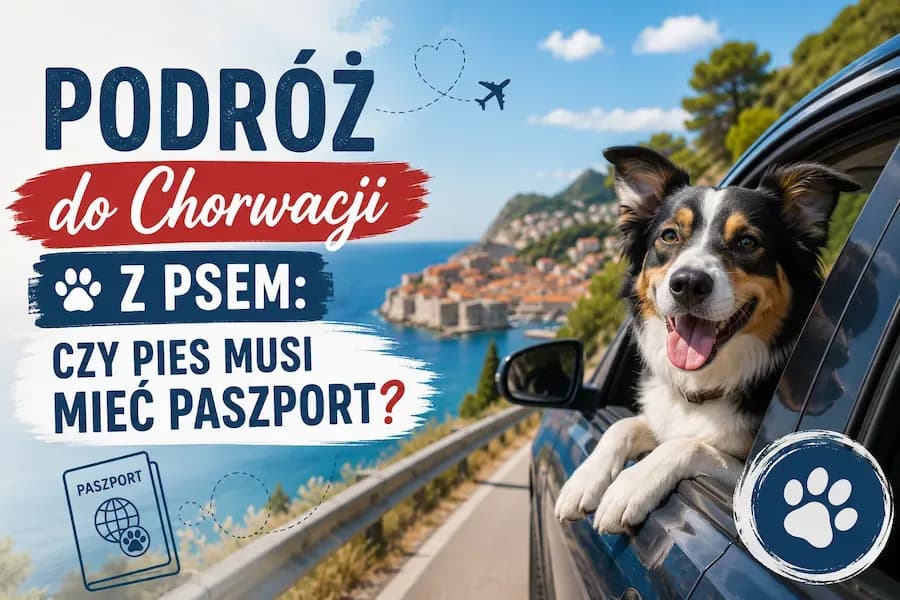
Traveling to Croatia with a Dog: Does a Dog Need a Passport? The Ultimate Guide for Drivers
Planning a dream holiday is undoubtedly one of the most exciting moments of the year. When your destination is Croatia—a country world-famous for its fabulous beaches lapped by the azure waters of the Adriatic Sea, monumental mountains descending directly into the waves, and thousands of charming islands—the anticipation reaches its peak. Nowadays, however, more and more travelers cannot imagine going on vacation without their beloved four-legged companions. Dogs have become full-fledged family members, and exploring the hidden gems of Istria, Kvarner, or Dalmatia together is an incredible adventure that deeply strengthens the bond between the pet and its owner.
Traveling by car from Central or Northern Europe to the Balkans offers immense flexibility. You can pack as much luggage as your trunk can hold, plan the route according to your own preferences, and make pit stops exactly when your dog needs to stretch its legs. However, an international road trip with a dog is not just a matter of packing enough kibble, portable bowls, and favorite toys. First and foremost, it is a complex legal and veterinary operation. The regulations governing the movement of pets within the European Union are highly restrictive, and lack of preparation can turn a long-awaited holiday into a stressful nightmare at roadside checkpoints, resulting in heavy fines or even forced quarantine at the owner's expense.
In this comprehensive, exhaustive guide, we will answer the most fundamental question asked by pet owners: does a dog need a passport to enter Croatia? We will look closely at all veterinary procedures, analyze the necessary formalities step-by-step, discuss the specifics of traveling through transit countries, outline the rules for safe pet transportation inside the vehicle cabin, and give you crucial tips on handling highway tolls so that your journey remains smooth, safe, and fully compliant with international law.
Quick and Clear Answer: Yes, your dog absolutely must have its own official European Union Pet Passport to legally enter the Republic of Croatia and to travel through all transit countries. A standard national pet health record book, where your local vet records routine deworming or basic puppy vaccinations, holds no legal power across international borders.
1. The Legal Status of Croatia and Pet Travel Regulations
Before diving deep into specific medical procedures, it is crucial to accurately outline the geopolitical and legal status of the destination country. Croatia officially joined the European Union on July 1, 2013. Another milestone that dramatically simplified things for drivers was Croatia's full entry into the Schengen Area and its simultaneous adoption of the Euro currency on January 1, 2023. In the current year of 2026, this means that borders between Croatia, Slovenia, and Hungary are crossed smoothly without the need to stop for permanent passport or customs control booths.
However, many inexperienced tourists draw a false and extremely risky conclusion from this fact: they assume that since there are no physical border checkpoints, nobody checks pet documents, and therefore a dog passport can be omitted. This is a highly dangerous myth. The removal of static border stations does not mean the abolition of the law. Customs services, highway police, and mobile veterinary inspection units in every single country you cross (including Germany, Poland, Czechia, Austria, Slovakia, Hungary, and Slovenia) have the full right to stop any vehicle and conduct random checks regarding the legality of pet transportation.
The non-commercial movement of pet animals (defined as travel for purely touristic purposes where the owner is accompanied by a maximum of 5 pets) within the European Union is strictly governed by Regulation (EU) No 576/2013 of the European Parliament and of the Council. These rules are uniform, mandatory, and not subject to local interpretations by travelers. Leaving home without the correct documentation exposes you to immense risks.
2. What Is an EU Pet Passport and How Do You Get One?
The EU Pet Passport is an official, standardized document with a strictly defined format. It features a characteristic blue cover decorated with the European Union yellow stars emblem and contains a unique serial number assigned to a specific country. This document serves a dual purpose: it acts as an international identification card and an official medical record recognized by all European authorities.
Who Is Authorized to Issue a Pet Passport?
You cannot obtain a pet passport at a town hall, municipal office, or any standard civil administration building. Because this document carries serious medical and legal weight, it can only be issued by licensed veterinarians who have been granted specific state authorization by the relevant Veterinary Chamber. Not every local veterinary clinic has these administrative permissions. Before booking an appointment, it is highly recommended to call your clinic or check the official national registry of authorized veterinarians online to ensure your chosen doctor can legally issue the passport.
Cost and Issuance Procedure
The baseline administrative fee for the physical passport document itself is usually regulated by state veterinary councils (for example, it is a fixed nominal fee in countries like Poland, Czechia, or Slovakia). However, pet owners must understand that this fee covers only the administrative paperwork. Your vet will add the costs of the mandatory clinical examinations, the implantation of the microchip (if the dog is not already chipped), and the administration of the rabies vaccine. In practice, the total cost of a veterinary visit to establish a pet passport from scratch typically ranges between 50 and 100 Euros, depending on the clinic's regional rates.
Detailed Structure of the Passport – What Should the Owner Verify?
When receiving the passport from the veterinarian, the owner should carefully review all entries. Any formal clerical error could invalidate the document during a strict inspection. The passport consists of several mandatory sections:
- Section I: Owner Details – Contains the first name, surname, exact residential address, telephone number, and the signature of the person traveling with the pet. Multiple owners can be listed if applicable.
- Section II: Description of the Animal – Includes the dog's name, breed (or crossbreed specification), sex, date of birth, color, and any distinctive physical traits.
- Section III: Marking of the Animal – A critical section featuring the unique 15-digit microchip code, the exact date of its implantation, and its anatomical location on the dog's body. The barcode sticker containing the chip number must be permanently sealed with a special transparent self-adhesive laminating foil provided by the veterinary chamber. Any signs of tampering or peeling will immediately invalidate the passport.
- Section IV: Issuance of the Passport – The stamp, signature, and professional data of the authorized veterinarian who created the document.
- Section V: Vaccination Against Rabies – The most vital medical section for border compliance. It must display the date of the vaccination, the commercial name of the vaccine manufacturer and product, the specific manufacturing batch/lot number, and the explicitly defined period of validity (the precise "from" and "to" dates). This section must also be laminated by the vet.
3. The Three Pillars of Legal Pet Travel: Microchip, Rabies Vaccine, Passport
Simply carrying the blue booklet in your glove compartment does not mean your dog is traveling legally. To make the passport fully valid in the eyes of foreign law enforcement, you must strictly fulfill three medical pillars. Most importantly: the chronological order in which these procedures are performed is paramount under European law.
Pillar I: Electronic Identification (The Microchip)
The absolute first step in preparing your dog for an international trip is proper electronic identification. The only fully accepted method of marking pets within the European Union is the subcutaneous implantation of a miniature transponder, commonly known as a microchip. This microchip operates using passive RFID technology and stores a unique 15-digit identification number that can be read using a standard universal scanner. The chip must strictly comply with the technical requirements of ISO Standard 11784 or ISO Standard 11785.
Traditional identification marks like tattoos are only respected by Croatian and transit authorities under one highly specific condition: the tattoo must have been cleanly applied before July 3, 2011, must remain perfectly legible, and the owner must present written veterinary documentation proving the exact date of application. In the reality of 2026, a microchip is the universal standard you should rely on.
The Golden Rule of Chronology: The microchip must be implanted BEFORE or at the absolute latest ON THE EXACT SAME DAY as the rabies vaccine that is to be entered into the passport. A rabies vaccination administered to a dog that was not uniquely identified by a microchip at the moment of injection is considered LEGALLY INVALID under EU regulations. If your dog was vaccinated six months ago but only received its microchip today, you must re-administer the rabies vaccine and wait out the mandatory validation period!
Once the chip is implanted, we strongly advise checking whether your vet has registered the number in international pet databases (such as SAFE ANIMAL, WORLDPETNET, or Europetnet). While this is not a strict requirement for crossing borders, if your dog gets startled by summer fireworks or runs away on a crowded Croatian beach, an active registration in a global database is your only real hope for a quick recovery.
Pillar II: Valid Rabies Vaccination and the 21-Day Waiting Period
Rabies is a fatal viral disease, and the European Union treats its prevention with utmost severity. Every dog heading to Croatia must have an active vaccination record. This is where many tourists fall into a major trap, completely forgetting about the mandatory 21-day legal waiting period.
- Primary Vaccination (First time or lapsed): If your dog is being vaccinated against rabies for the very first time in its life (permitted after reaching 12 weeks of age) or if the previous vaccine expired by even a single day, the vaccination becomes legally valid for international travel only **after a full 21 days have elapsed**. The day of the injection is counted as day zero. Therefore, you cannot vaccinate your dog a week before your trip; border control units will deny entry.
- Booster Vaccinations (Continuous coverage): If your dog is regularly vaccinated every year (or every 2-3 years, depending on the manufacturer's specification and the official expiration date stamped by the vet), and the booster shot was administered **before the previous expiration date**, the vaccine maintains continuous legal validity. In this case, there is no 21-day waiting period, and you can cross borders immediately.
Pillar III: Clinical Examination Before Departure
The passport includes a dedicated section for confirming the general health status of the animal (Section X). While not routinely checked at every single highway stop within Schengen, European veterinary guidelines recommend visiting your vet within 48 hours prior to departure. The vet will perform a quick clinical exam to rule out symptoms of infectious diseases and stamp the passport, certifying the dog is fit for travel. Having this stamp prevents any unnecessary complications if you are pulled over by traffic police in Austria or Slovenia.
4. Transit Countries – Plan Your Route and Don't Forget Your Vignettes!
Driving from Northern or Central Europe down to Croatia means covering a distance of anywhere from 800 to 1,600 kilometers, resulting in 10 to 20 hours on the road. From the perspective of a driver traveling with a dog, the number one goal is maintaining a smooth and stress-free journey. Animals easily absorb the anxiety of their owners. Unexpected traffic jams, frantically searching for toll booths at border zones, or waiting in long lines at gas stations greatly compound your dog's exhaustion and discomfort.
In 2026, highway toll systems across Central Europe are almost entirely digital. To ensure your journey is seamless and free of hefty automated fines, every responsible driver should buy their e-vignettes before leaving home. By using the authorized, user-friendly portal digital vignettes online, you can secure road access for your entire transit route in just a couple of minutes. The system binds the digital vignette directly to your vehicle's license plate, allowing you to pass under automated highway cameras without stopping.
Depending on your chosen transit route, you will need to secure digital vignettes for specific countries:
- Czech Republic: If you travel through Upper Silesia, Ostrava, and Brno, registration in the Czech highway system is mandatory. You can quickly secure this by ordering official vignettes to Czech Republic.
- Slovakia: A preferred alternate route for drivers coming from Eastern regions leads through Prešov, Košice, or Bratislava. Legal transit on Slovak expressways is covered by digital vignettes for Slovakia.
- Austria: The most popular route toward the Alpine passes, Vienna, and Graz. Austria is famous for its uncompromising, automated fine enforcement via overhead cameras. Buying your digital vignettes to Austria in advance will protect you from steep financial penalties.
- Hungary: An excellent, flat route that avoids mountain passes altogether—ideal for reaching Eastern Croatia or Bosnia borders. You can comfortably cover these roads by choosing digital vignettes for Hungary.
- Slovenia: The notorious "bottleneck" right before the Croatian border. Slovenian police and DARS highway cameras strictly monitor every single vehicle. Failing to have an active e-vinjete results in immediate fines starting at 300 Euros. It is best to purchase your digital vignettes to Slovenia well in advance to cover your entire holiday duration.
The Professional Driver's Tip: Purchasing your complete set of e-vignettes beforehand via Winiety24.eu gives you ultimate peace of mind. Instead of wasting time in hectic queues at border gas stations—where your dog would be forced to wait inside a stuffy car or stand on dangerously hot asphalt—you drive straight through. You only stop for breaks at quiet, shaded rest areas surrounded by grass, keeping your pet calm and hydrated.
5. Traffic Laws: How to Safely Transport a Dog Inside Your Car
While having a valid dog passport and a full set of digital vignettes covers your legal bases, you must also adhere to strict traffic laws regarding pet safety inside the vehicle cabin. Highway police in Austria, Czechia, Germany, and Croatia view unsecured pets with zero tolerance. From a physics perspective, during an emergency braking maneuver at highway speeds (130 km/h), an unsecured 20 kg dog flies forward into the front seats or windshield with an impact force equivalent to a small mammal weighing several hundred kilograms, posing a fatal threat to both itself and the human passengers.
Under the traffic codes of most European nations, a pet inside a vehicle is legally treated as a "load" or cargo. As such, it must be secured so that it cannot interfere with the driver, block visibility, or cause a hazard during sudden movements. What transport solutions are fully accepted by European highway police?
- Certified Pet Seat Belts: These consist of a heavy-duty, crash-tested harness (never attach a seat belt to a standard collar, as it can cause fatal neck fractures!) made of specialized webbing that clicks directly into the factory seat belt buckles on the rear bench. This is ideal for small to medium-sized dogs.
- Travel Crates and Transporters: This is widely considered the safest solution. The crate (made of impact-resistant plastic or solid aluminum) must fit the dog's size comfortably (allowing it to turn around and lie down) and be securely anchored in the trunk area (for station wagons, SUVs, or hatchbacks) or placed on the floorboards behind the front seats. The crate must not slide around.
- Trunk Grilles and Dividers: If your dog travels loose within a large cargo bay, the trunk space must be completely separated from the passenger cabin by a heavy-duty metal grille securely anchored to the vehicle's structural frame.
If you are caught carrying a dog completely loose—such as sitting on the dashboard, riding on a passenger's lap, or pacing on the rear window shelf—Austrian or Slovenian police officers have the full authority to issue heavy fines and prohibit you from driving further until the animal is properly secured.
6. Pet Travel Requirements Checklist
To help you easily verify your preparations before hitting the road, we have compiled a clean, comprehensive checklist table summarizing all the international requirements:
| Parameter / Requirement | Status in Croatia | Transit Countries (CZ, SK, AT, HU, SI) | Technical Details & Practical Advice |
|---|---|---|---|
| EU Pet Passport | Mandatory | Mandatory | Issued exclusively by authorized state vets. Essential ID document. |
| Electronic Microchip | Mandatory | Mandatory | Must comply with ISO 11784/85. Must be done before vaccination. |
| Rabies Vaccination | Mandatory | Mandatory | Requires a 21-day waiting period for primary shots. Check validity dates! |
| Echinococcus Treatment | Not Required | Not Required | Croatia does not require this tapeworm treatment (unlike Finland or Malta). |
| Clinical Exam Entry | Recommended | Recommended | Have your vet stamp Section X within 48 hours of departure for total safety. |
| Cabin Security Device | Mandatory | Mandatory (Strict in AT) | Crash-tested harness, anchored travel crate, or robust trunk partition. |
| Highway Toll Coverage | Pay at booths | Mandatory digital e-vignettes | Secure all highway access codes smoothly online at Winiety24.eu. |
7. The Transit Trap: Avoiding Bosnia & Herzegovina via the Pelješac Bridge
When planning a trip to the deep south of Croatia—to the breathtaking historical pearl of Dubrovnik—many drivers analyze old maps and notice the "Neum Corridor". This is a small strip of coastline belonging to Bosnia & Herzegovina that historically cut right through Croatian territory, separating the Dubrovnik region from the rest of the country. While border crossing for human tourists has been simplified over the years, for a pet owner, entering the Neum Corridor is a massive legal trap.
Bosnia & Herzegovina IS NOT a member of the European Union or the Schengen Area. Driving into Neum means you are formally leaving the unified EU sanitary and customs zone. When you attempt to re-enter Croatia from Bosnia, your dog will be treated as an animal arriving from a third country with a high risk of rabies. To make this entry legal, your dog would need to have a **rabies antibody titration test (serology)** performed in an approved laboratory at least 3 months prior to crossing! Failing to have this test will result in border authorities blocking your entry back into the EU.
The Modern Solution: The Pelješac Bridge (Pelješki most)
Fortunately, this logistical nightmare is completely a thing of the past. The monumental Pelješac Bridge connects the Croatian mainland at Komarna directly to the Pelješac Peninsula, allowing drivers to completely bypass Bosnia & Herzegovina. This ensures you remain within the protective borders of Croatia and the European Union for your entire trip.
Crossing the Pelješac Bridge is completely free of charge—there are no extra tolls or fees. When driving with a dog toward Dubrovnik, make sure your GPS navigation system is fully updated and routes you across the bridge rather than through the Neum border checkpoints. This simple adjustment is vital for keeping your trip smooth, legal, and stress-free.
8. Climate and Health Hazards for Dogs in Croatia
Croatia welcomes visitors with glorious sunshine and a gorgeous Mediterranean climate. However, this warm weather brings specific health challenges for canine bodies. As a responsible owner, you need to implement specialized preventative care a few weeks before departure.
Heatstroke (Hyperthermia) – The Silent Danger
Dogs cannot sweat through their skin to cool down; they rely almost exclusively on panting. The intense summer temperatures in Dalmatia or Istria (frequently exceeding 35–40°C in July and August) place immense strain on a dog's cardiovascular system. The absolute golden rule of summer travel is: NEVER leave a dog alone inside a parked vehicle, even for five minutes, and even with the windows cracked open. Inside a car parked in the Croatian sun, temperatures can skyrocket to nearly 60°C in mere minutes, causing rapid organ failure and death. In Croatia, leaving a pet in a hot car is prosecuted as a criminal offense of animal cruelty, and citizens or emergency services have the full legal right to smash your car windows to save the animal's life.
While driving down the highway, ensure your air conditioning runs efficiently, protect the side windows with sunshades, and stop every 2–3 hours to offer fresh water. Gel-filled self-cooling mats that activate under the dog's body weight are exceptional accessories for hot road trips.
Vector-Borne Diseases (Mediterranean Parasites)
The Mediterranean basin is home to specific biting insects and parasites that are not common in colder Northern climates. Standard tick collars may not provide sufficient protection. Before leaving for Croatia, consult your veterinarian to set up a defense plan against two major regional threats:
- Leishmaniasis: A severe, incurable, chronic systemic disease transmitted by sandflies (tiny biting insects related to mosquitoes). Sandflies are highly active across Croatia after sunset, particularly near olive groves, beaches, and coastal brush. Protection requires using specialized veterinary repellents (spot-on drops or heavy-duty collars) containing active ingredients like permethrin to prevent sandflies from biting.
- Dirofilaria (Heartworm Disease): This condition is caused by parasitic roundworms transmitted through the bite of local mosquitoes. The microscopic larvae enter the dog's bloodstream and migrate over several months into the pulmonary arteries and the heart chambers, causing severe cardiac failure. Prevention involves administering specific prophylactic deworming medications (such as milbemycin oxime) just before the trip, during your stay, and immediately upon returning home.
9. Daily Life with a Dog in Croatia: Beaches, Restaurants, and Ferries
Generally speaking, Croatia is highly welcoming to pets. However, the booming tourism industry has led to the introduction of clear, strict rules to ensure that pet owners and those vacationing without animals can coexist harmoniously.
Official Dog Beaches (Pseće plaže)
On the vast majority of main town public beaches—especially those flying the prestigious Blue Flag (*Plava zastava*)—there is a strict and absolute ban on dogs. Violating this rule results in immediate fines levied by communal code enforcement officers (*Komunalno redarstvo*), ranging from 100 to 400 Euros. Dogs are simply not allowed to swim where families with children are relaxing.
To accommodate pet parents, Croatia has built an incredible network of dedicated dog beaches. These areas are explicitly marked with signs displaying a dog icon and the words **"Pseća plaža"**. These spots are often exceptionally well-equipped, offering pet waste bins, fresh-water showers to rinse salt out of coats, and even dedicated dog bars (such as the famous *Podvorska* beach in Crikvenica, which features a bar selling canine ice cream and non-alcoholic bone broth "beer"). Wonderful dog-friendly beaches can be found all over the islands of Krk, Cres, and Lošinj, as well as throughout Istria (Rovinj, Medulin) and Dalmatia (Split’s *Duilovo* beach, Zadar, and Makarska).
On remote "wild beaches" far from tourist crowds and resorts, dogs are generally permitted to enjoy the sea, provided they do not disturb anyone nearby. Always remember to rinse your dog with fresh water after a swim; drying sea salt combined with intense Mediterranean sunlight can trigger painful allergic skin reactions and hot spots.
Restaurants, Cafés, and Public Transport Etiquette
Most Croatian waiters and restaurateurs welcome well-behaved dogs with open arms, especially in outdoor terrace dining areas (*Konoba*). Seeing a calm dog resting on a leash next to a table is a standard sight; often, before the waiter even takes your order, they will bring out a cold bowl of fresh water for your pet. However, it is always polite to ask the staff before sitting down: *"Smije li pas unutra?"* (May the dog come in?).
If you plan to explore the spectacular islands using national ferry lines (such as *Jadrolinija*), pet transit is typically free of charge or requires a token ticket. However, dogs are strictly restricted to the open-air outer passenger decks. Large breeds must wear a muzzle and be kept on a short leash at all times, while small breeds can travel inside enclosed passenger lounges if kept within a secure travel carrier.
10. Comprehensive FAQ Section – Frequently Asked Questions
Can a 2-month-old puppy travel to Croatia without a passport and vaccine?
Absolutely not. European Union law strictly prohibits the international transport of young puppies that do not possess a valid, active rabies vaccination. Since the absolute earliest a puppy can legally receive a rabies shot is at 12 weeks of age, and you must then add the mandatory 21-day legal waiting period for primary vaccines, the youngest a dog can possibly be to legally cross into Croatia is **15 weeks old (roughly 3.5 months)**. Croatia allows no national exemptions to this EU rule.
What should I do if I lose my dog's passport while vacationing in Croatia?
If your pet's passport is lost or stolen during your holiday, you should immediately report to the nearest official local veterinary clinic (*Veterinarska stanica*). A Croatian veterinarian can scan your dog's microchip to verify its identity. After checking international databases or performing a clinical health check, they can legally issue an official duplicate or a new Croatian EU Pet Passport, transferring the vital vaccination history so you can cross borders legally on your way home.
Is a muzzle legally required for dogs in public spaces across Croatia?
Croatian public safety laws dictate that dogs must be kept on a secure leash in all public areas, parks, and city streets. The requirement to wear a muzzle applies continuously to breeds locally categorized as potentially dangerous (such as American Staffordshire Terriers, Pitbull Terriers, Rottweilers, and Dobermans), as well as to **all dogs regardless of breed** when riding public transit (buses, ferries) or navigating extremely dense tourist crowds.
How can I verify if my dog's microchip is working properly before we leave?
Before embarking on any major international road trip, it is highly recommended to ask your local vet to run a quick routine scan over your dog's neck. In very rare instances, a microchip can fail electronically or migrate deep into muscle tissue layers, making it difficult to read with standard equipment. Ensuring the chip scans cleanly is the absolute foundation of your pet's legal identity abroad.
Summary
Taking an international road trip to Croatia with your dog is a spectacular way to spend an unforgettable holiday surrounded by family. To make sure your getaway leaves you with nothing but joyful memories, you must act responsibly and finalize all legal and medical steps well ahead of time. An official blue EU Pet Passport, a perfectly functioning microchip, and an up-to-date rabies vaccination with a fully cleared 21-day waiting period form the absolute legal foundation required before leaving home.
Equally critical to your holiday success is managing the logistical side of your road trip. Prioritize your pet's comfort and safety by utilizing crash-tested harnesses or travel crates, and design your driving schedule to be as smooth as possible. Forgo the exhausting and unnecessary hassle of waiting in crowded highway queues to buy toll stickers at border points. Opting for a streamlined modern solution by purchasing all your required vignettes through the internet beforehand is the greatest gift you can give yourself and your dog on day one of your journey. Handle the medical details at your vet, secure your digital vignettes at **Winiety24.eu**, and immerse yourself in the sunny magic of Croatia alongside your most loyal, four-legged friend. Have a safe, wonderful trip!