Can I Drive Abroad with a Temporary Registration Certificate? [2026]
Driver documents • travelling abroad • e-vignettes
Can I drive abroad with a temporary vehicle registration certificate?
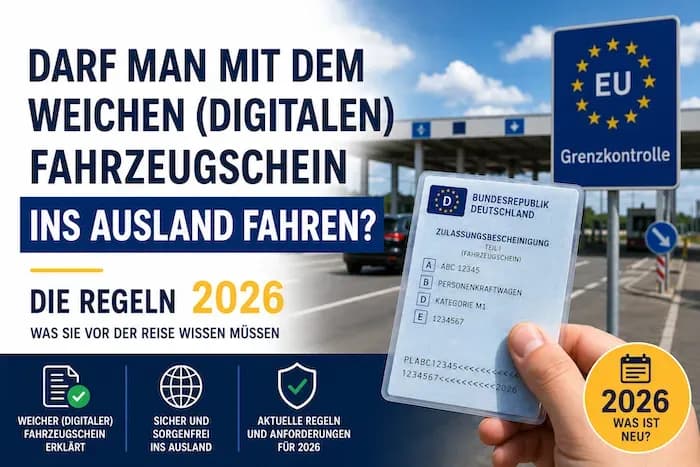
The short answer: a temporary vehicle registration certificate confirms that the vehicle is admitted to road traffic in its country of registration, but driving abroad with it can be risky, because acceptance depends on how local authorities interpret the document. For an international road trip, the safest option is to wait for the permanent registration certificate. If you must travel earlier, take a complete set of documents, check your insurance and technical inspection, get written authorisation for the vehicle if needed, and buy the e-vignettes for your route at Winiety24.eu.
Key takeaways for drivers
Temporary certificate
A temporary document issued before the final vehicle registration certificate is ready.
Domestic use
It usually confirms that the vehicle may be used on public roads for a limited period.
Abroad
It may be accepted, but foreign police officers may not recognise it as easily as a permanent document.
Safest option
For a longer international trip, travel with a permanent registration certificate whenever possible.
This guide is for drivers who have collected a vehicle, have plates and a temporary registration certificate, but do not yet have the final registration document. We explain what to check before leaving the country, what risks may arise in the Czech Republic, Austria, Slovakia, Slovenia, Germany and Hungary, and how to prepare your route from the e-vignette point of view. If your route includes toll roads, choose a country: Czech Republic vignette, Austria vignette, Slovakia vignette, Hungary vignette or Slovenia vignette.
What is a temporary vehicle registration certificate?
A temporary vehicle registration certificate is a document used during the transition period before the permanent registration certificate is issued. It is common when a vehicle has just been registered, when ownership has changed, when a car has been imported, or when the registration authority needs time to produce the final document.
It should not be treated as a simple receipt or an informal note. It is an administrative document that may allow the vehicle to be driven for a limited period. However, an international road trip is not only about whether the document is valid domestically. The key question is whether it will be recognised quickly and without doubt by police officers, border services, road inspectors, toll operators or insurers in another country.
That is why the question “Can I drive abroad with a temporary registration certificate?” cannot always be answered with a simple yes or no. You may have a valid temporary document, valid plates and insurance, but during a roadside check in another country, an officer may expect a standard vehicle registration certificate in a familiar format.
Can you drive abroad with a temporary registration certificate?
The most practical answer is: it is not recommended if you can wait for the permanent registration certificate. A temporary certificate may confirm vehicle registration for a defined period, but international travel requires the document to be understood and accepted by authorities outside the country of registration. This is where practical risk begins.
Within Europe, many vehicle documents are recognised across borders, but temporary certificates do not always look like standard registration documents. They may not be familiar to local officers and may lead to longer checks, additional questions or a request for extra proof. In most cases, the problem is not that the driver is acting in bad faith. The problem is uncertainty: the foreign officer must decide whether the document is enough to prove that the vehicle is legally allowed on the road.
The risk increases when the document is close to expiry, the vehicle was recently imported, the driver is not the owner, the vehicle is leased or company-owned, the vehicle has temporary plates, or the trip crosses several countries. Then the temporary certificate is only one part of the file. You also need insurance, authorisation to use the vehicle, proof of technical inspection, e-vignette confirmations and, in some cases, leasing or rental documents.
If the trip is optional, waiting for the permanent certificate is usually the most convenient and least stressful solution. If you must leave earlier, prepare as if you needed to explain the situation to someone who has never seen your national temporary document before.
Document checklist before driving abroad with a temporary certificate
If you still decide to travel, treat documents as a separate part of route planning. Buying an e-vignette online is important, but it will not help if, during a roadside check, you cannot show a valid vehicle document, proof of insurance or authorisation to drive a company vehicle.
Take these documents with you:
- the original temporary vehicle registration certificate,
- valid registration plates mounted on the vehicle,
- proof of valid third-party liability insurance,
- Green Card if required for the country of travel or transit,
- proof of technical inspection if it is not clear from the registration document,
- driver’s ID card or passport,
- driving licence,
- authorisation from the owner, leasing company or employer if the vehicle is not yours,
- e-vignette and toll confirmations,
- PDF or printed copies of vignette orders for every transit country,
- phone numbers for the insurer, assistance provider and vehicle owner.
Electronic vignettes are linked to the vehicle registration number. That is why, when you travel with a temporary document, it is especially important to enter the plate number and country of registration correctly. When buying through Winiety24.eu, always check the registration number before payment. If there is a typo, the control system in the Czech Republic, Austria, Slovakia, Slovenia or Hungary may not recognise the payment. Afterwards you can check your vignette validity.
Temporary registration certificate and electronic vignettes
For e-vignette systems, the most important element is the vehicle registration number. An electronic vignette is not a sticker on the windscreen and it is not attached to the physical registration certificate. It is assigned to the vehicle data, mainly the plate number and country of registration. This can be good news if you have a temporary certificate but already have the plates you will use during the trip.
The problem appears when you use temporary plates, export plates or a registration number that will soon change. If you buy a vignette for a temporary number and then receive new plates before the trip, the vignette may no longer match the vehicle. Before buying, make sure which plates will actually be on the car when you enter toll roads.
For routes through the Czech Republic and Austria, you can prepare a Czech Republic vignette and an Austria vignette. If you are travelling further south, check the Slovenia vignette. For routes through Bratislava, choose the Slovakia vignette, and for trips to Budapest or further towards the Balkans, prepare the Hungary vignette.
Czech Republic, Austria, Slovakia, Hungary and Slovenia – roadside check risks
Most questions from drivers concern transit countries used on holiday routes and business trips: the Czech Republic, Austria, Slovakia, Hungary and Slovenia. Each of these countries uses electronic vignette systems, and checks are often based on automatic number plate recognition.
If you drive with a temporary registration certificate, the e-vignette check may pass without any issue if the plate number is correct, the vignette is active and the vehicle is legally admitted to road traffic. However, during a roadside check, an officer may ask for the vehicle registration document. The temporary certificate must be valid, readable and consistent with the plates and vehicle data.
| Country | Toll system | Main risk with a temporary certificate | Buy vignette |
|---|---|---|---|
| Czech Republic | E-vignette for motorways | Number plate and vehicle document verification | Czech Republic vignette |
| Austria | Vignette plus special toll sections | The vignette must be active, and special sections may require an additional toll | Austria vignette |
| Slovakia | E-vignette | Incorrect plate or registration country may mean the toll is not recognised | Slovakia vignette |
| Hungary | E-matrica | Vehicle category and correct registration number are essential | Hungary vignette |
| Slovenia | E-vignette with vehicle classes | Risk of choosing the wrong 2A/2B class and document verification | Slovenia vignette |
If your route crosses several countries, use our guide to road tolls in Europe 2026. For holiday trips, the Croatia road trip 2026 guide can also help you plan vignettes and road costs.
Are digital vehicle documents enough abroad?
Many drivers are used to digital documents and mobile apps. However, there is a difference between domestic convenience and an international roadside check. The fact that a document is visible in your national digital system does not automatically mean that a foreign officer can access it or will treat it as enough.
When travelling abroad, do not rely only on an app, a photo or a screenshot. Take the physical vehicle document, whether it is a temporary certificate or the permanent registration certificate. Also take proof of insurance and an identity document. If you have an e-vignette confirmation in PDF, save it offline on your phone and keep a copy in your email account.
When buying vignettes on Winiety24.eu, keep confirmations for each country. A route to Austria and then Croatia may require several documents: Czech Republic, Austria, Slovenia, and sometimes confirmations for special toll sections such as the A11 Karawanken tunnel or motorway toll booths.
Company car, leasing or rental vehicle – additional documents
If the car is not registered to you, travelling abroad with a temporary registration certificate requires even more caution. This applies to company cars, leased vehicles, rented cars, vehicles borrowed from family members and newly purchased cars whose ownership documents are still fresh.
In such cases, written authorisation to use the vehicle abroad is strongly recommended. For leasing or rental vehicles, authorisation from the leasing company or rental company may be required. The document should include vehicle data, driver data, the period of validity, permission to travel abroad and, ideally, an English version or a version in the language of the destination country.
During a roadside check, the officer may not only verify whether the vehicle has a vignette. They may also want to know whether the driver is allowed to use the vehicle, whether the documents match and whether the vehicle is not involved in an ownership dispute. A temporary certificate, a company car and no authorisation is a risky combination.
Insurance, Green Card and assistance
A vehicle registration document is not enough. Every vehicle must have valid third-party liability insurance. In many European countries, insurance from another European country is recognised, but some destinations or transit routes may still require a Green Card or another confirmation of cover. Check with your insurer before departure.
If the vehicle has just been purchased or registered, make sure the policy has been correctly assigned, paid and updated. Do not assume that the insurer automatically corrected all details. Check the registration number, VIN, policy start date and territorial scope of protection.
Assistance cover is especially useful when travelling with a temporary document. A breakdown, accident or roadside check abroad becomes much more stressful if you do not have the permanent registration certificate and do not speak the local language. Good assistance can help with towing, translation, contact with a workshop and organising your return. See also: tow truck costs in Croatia and scams to avoid.
Temporary registration and routes to Croatia, Italy or Austria
A common scenario is a newly purchased car and a holiday trip planned immediately afterwards. The driver has a temporary certificate, plates, valid insurance and wants to travel to Croatia, Italy, Austria, Slovenia or Hungary. On paper, everything may seem ready. In practice, such a route can involve several countries, several toll systems and a higher chance of inspection.
For Croatia via the Czech Republic and Austria, you usually need a Czech Republic vignette, an Austria vignette, sometimes an Austrian special toll section, and a Slovenia vignette. In Croatia, motorway tolls are usually paid at toll booths. For Italy via Brenner, you need tolls for the Czech Republic and Austria, the A13 Brenner section toll, and then Italian motorway tolls. Each stage can involve number plate and document checks.
If you only have a temporary certificate, consider whether the trip really has to take place before the permanent document is ready. Waiting a few days for the final registration certificate may be cheaper than explaining documents in a foreign language or dealing with an insurance issue after a collision.
Prepare e-vignettes for the whole route
On Winiety24.eu, you can buy online vignettes for the most important transit countries: Czech Republic, Austria, Slovakia, Hungary and Slovenia.
When should you definitely avoid travelling abroad with a temporary certificate?
There are situations where an international trip with a temporary certificate is especially risky. The first is when the document expires during the trip. Even if it is valid on the day of departure, returning with an expired vehicle document can create serious problems.
The second is when you use temporary plates or expect the plates to change before or during the trip. E-vignettes are linked to the registration number, and insurance and vehicle documents must be consistent. A change of number can mean that toll payments bought earlier no longer match the vehicle.
The third is when the car was recently imported and the registration process is still incomplete. Such vehicles may attract longer checks abroad. The fourth is when the vehicle is leased or company-owned and you have no written authorisation. The fifth is when you do not have clear proof of insurance or assistance for all transit countries.
How to handle a roadside check abroad
If you are stopped for a check, stay calm and present documents in a logical order. Start with your ID or passport and driving licence, then the temporary registration certificate, proof of insurance, authorisation for the vehicle if needed, and e-vignette confirmations. Do not expect the officer to know the informal name used for your temporary document.
Use a simple description such as “temporary registration certificate” or “temporary vehicle registration permit”. If the document has labels in your national language, it can be helpful to have a short explanation of the key terms: registration number, VIN, owner, expiry date, admission to road traffic. Do not create fake translations, but a practical note with explanations can help communication.
If doubts remain, ask whether you can contact your insurer, assistance provider, leasing company or consular service. If the issue concerns an e-vignette, show the purchase confirmation with the registration number and validity date. Remember that electronic toll systems compare the plate number, so the confirmation must match the vehicle.
Most common mistakes made by drivers
Buying a vignette for the wrong plate
If the car uses temporary plates and later receives different plates, the previously purchased vignette may not match the vehicle.
No physical document
An app, photo or screenshot may not be enough during a foreign roadside check.
Travelling close to expiry
If the temporary certificate expires during the trip, returning home may become problematic.
No authorisation
A company, leased, rented or borrowed vehicle should have written permission for international travel.
No insurance confirmation
Fresh registration without clear insurance proof can create unnecessary trouble.
Confusing national vignette systems
A Czech Republic vignette does not work in Austria, and an Austria vignette does not replace Slovenia or Hungary vignettes.
What if you must travel before receiving the permanent certificate?
First, check the validity of the temporary certificate and make sure it covers the entire trip with a safety margin. Second, contact the registration authority and ask whether the document was issued in the standard way and whether there are any restrictions. Third, contact your insurer and confirm protection in all transit countries.
Fourth, if the vehicle is company-owned, leased or rented, obtain written authorisation. Fifth, plan your route and buy e-vignettes for the countries where you will use toll roads: Czech Republic, Austria, Slovakia, Hungary or Slovenia.
Sixth, keep documents in both paper and digital form. Seventh, be ready to explain the temporary document during a check. Eighth, if the trip is not urgent, postpone it until the permanent vehicle registration certificate is ready. That is often the simplest and least stressful solution.
FAQ – temporary vehicle registration certificate and driving abroad
Can I drive abroad with a temporary registration certificate?
It may be possible, but it is risky. A temporary certificate may confirm domestic admission to road traffic, but its acceptance abroad can depend on local practice and the officer’s interpretation.
Is it better to wait for the permanent registration certificate?
Yes. If the trip is not urgent, the safest option is to wait until the permanent registration certificate is ready.
Is a temporary certificate the same as a registration certificate?
No. It is a transitional document issued before the final vehicle registration certificate. It usually has limited validity.
Can I buy an e-vignette for a car with a temporary certificate?
Yes, if you know the registration number that will be used on toll roads. The e-vignette is linked to the plate number, not to the physical certificate.
What if the plates change after buying a vignette?
This can create a problem because the e-vignette may remain linked to the old plate. Before buying, make sure which plates will be used during the trip.
Do I need authorisation for a company car?
Yes, it is strongly recommended. For company, leased, rented or borrowed vehicles, take written permission from the owner or operator.
Are digital vehicle documents enough abroad?
Do not rely only on digital documents. Take the physical vehicle document, insurance proof, driving licence and ID or passport.
Can I travel to Croatia with a temporary registration certificate?
It is risky because the route may cross several countries and several toll systems. Waiting for the permanent certificate is safer.
Do I need a Green Card?
It depends on the country. Ask your insurer whether your route requires a Green Card or whether standard liability insurance is enough.
Should the temporary certificate be valid on the return date?
Yes. It should cover the entire trip. Travelling back with an expired temporary document is highly risky.
Is a photo of the temporary certificate enough?
No. During a roadside check, you should have the original physical document. A photo may be helpful, but it should not replace the original.
Where can I buy e-vignettes for a trip abroad?
You can buy e-vignettes for popular transit countries online at Winiety24.eu by selecting the country, validity date and vehicle registration number.
Driving abroad? Prepare documents and e-vignettes before departure
If you only have a temporary registration certificate, be especially careful. Check document validity, insurance, vehicle authorisation and e-vignettes for transit countries. The easiest place to start is Winiety24.eu.